
The information provided in this article is intended solely for general informational and educational purposes related to U.S. laws and legal topics. It does not constitute legal advice, legal opinions, or professional legal services, and should not be considered a substitute for consultation with a qualified attorney or other licensed legal professional.
While efforts have been made to ensure the information is accurate and up to date, no guarantees are given—either express or implied—regarding its accuracy, completeness, timeliness, or suitability for any specific legal situation. Laws, regulations, and legal interpretations may change over time. Use of this information is at your own discretion.
It is strongly recommended to consult official sources such as the U.S. Government (USA.gov), United States Courts, or relevant state government and court websites before acting on any information contained on this website or article. Under no circumstances should professional legal advice be ignored or delayed due to content read here.
This content is of a general and informational nature only. It is not intended to replace individualized legal guidance or to establish an attorney-client relationship. The publication of this information does not imply any legal responsibility, guarantee, or obligation on the part of the author or this site.
Alright, let’s talk about the Eighth Amendment. You know, that little nugget of the Bill of Rights?
It’s got a big job. Basically, it’s all about keeping punishment fair and humane.
Ever heard someone say, “That’s cruel and unusual?” Yeah, that’s from this amendment!
Imagine a world where people faced wild punishments for minor mistakes—no thanks!
So, how does this play out in our courts? Let me break it down for you.
Understanding the Eighth Amendment: Key Principles and Implications for Justice
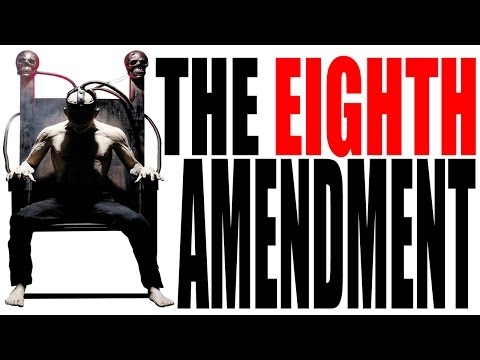
The Eighth Amendment is a crucial piece of the American legal framework. This amendment is part of the Bill of Rights and was ratified in 1791. It addresses some pretty serious issues related to punishment and justice, specifically focusing on preventing cruel and unusual punishments.
Key Principles
When you think about the Eighth Amendment, there are a few key principles to keep in mind:
- Prohibition of Cruel and Unusual Punishment: This means punishments should not be overly harsh or out of proportion to the crime committed.
- Protection Against Excessive Bail: The amendment also says that bail amounts set by courts can’t be excessive. This is important because it ensures that people are not punished before they’ve even been convicted.
- Prevention of Torture: It helps to ensure that punishments don’t involve torture or barbaric methods. You know, like what you might see in a historical drama on TV.
The Implications for Justice
So, what does this all mean for justice? Well, it plays a big role in how courts interpret laws around punishment. For instance, if someone gets sentenced to death for a non-violent crime, courts might rule that it’s cruel and unusual punishment under the Eighth Amendment.
There have been several significant Supreme Court cases that shaped our understanding of this amendment. For example, in Furman v. Georgia, the Court decided that the way death penalties were applied at that time was unconstitutional because it was arbitrary and discriminatory.
Another key case is Roper v. Simmons, where the Court ruled that executing individuals who were minors at the time of their crime violated the Eighth Amendment.
These rulings show how important context is when applying the Eighth Amendment—what seems acceptable now might not have been seen that way decades ago.
Anecdote Time!
Imagine someone named Jake; he’s a good guy who made a mistake as a kid and ended up getting into trouble with the law. A judge sentenced him to life without parole for stealing. This ruling sounds intense, right? But thanks to developments under the Eighth Amendment, like Miller v. Alabama, which made mandatory life sentences for juveniles unconstitutional, Jake’s future looks brighter now than it would have back then.
In essence, the Eighth Amendment acts as a safeguard against brutal punishments while pushing for fair treatment within our legal system. It’s about making sure we maintain some humanity—even when handling those who’ve messed up big time!
Understanding the 9th Amendment: Protecting Unenumerated Rights in the U.S. Constitution
The Ninth Amendment is one of those fascinating parts of the U.S. Constitution that often gets overlooked. It deals with **unnumerated rights**, which are rights not specifically listed in the Constitution. Basically, it says just because some rights aren’t mentioned doesn’t mean they don’t exist. This is super important because it helps ensure people’s freedoms aren’t limited to just what’s written down.
To get what I mean, let’s break it down a bit. The text of the Ninth Amendment reads: “The enumeration in the Constitution, of certain rights, shall not be construed to deny or disparage others retained by the people.” What this translates to is that your rights go beyond those explicitly stated in the Constitution.
Why was this included? Well, back in the day, when the framers were drafting the Bill of Rights, there was a huge concern that if they listed some rights, folks might assume those were all they had. Imagine that! You get this whole set of rules and then think you can be restricted because something wasn’t written down.
Let’s look at how this plays out in real life. For example, consider your right to privacy—you won’t find “privacy” written anywhere explicitly in the Constitution. Yet courts have recognized it as an essential right derived from various amendments (like the First and Fourth), thanks to the Ninth Amendment laying down a foundational principle that more rights exist.
What about its impact? The Ninth Amendment has definitely influenced several important court cases over time. Think about landmark rulings like Roe v. Wade; there, privacy rights came into play significantly and were supported partly by interpretations relating back to this amendment.
In essence, this amendment acts like a safety net for your liberties. It reassures you that even if something isn’t directly mentioned, it doesn’t mean it’s not valuable or protected.
However, there’s a catch: courts often struggle with how far these unenumerated rights stretch. Sometimes interpretations can clash with each other or be used differently based on context.
Moreover, while the Eighth Amendment deals primarily with protections against cruel and unusual punishment—think excessive bail or harsh treatment—the Ninth helps balance protections for personal freedoms more broadly.
So think of it like this: if your Eighth Amendment protections ensure you can’t face extreme punishments for actions deemed minor or harmless (like being locked away for something ridiculous), then your Ninth Amendment gives you room to have other freedoms outside what’s pinned on paper.
As ironic as it sounds, navigating these unenumerated rights can sometimes feel pretty complicated! But ultimately, understanding amendments like these enriches our grasp on what freedoms we really have—freedoms that go beyond any single page or document!
Understanding the Purpose of the Eighth Amendment: Protecting Against Cruel and Unusual Punishments
The Eighth Amendment is one of those cool little gems tucked away in the Bill of Rights. You know, the part of the Constitution that ensures basic freedoms and rights? Well, the Eighth Amendment specifically deals with punishments, and it’s all about protecting us from harsh treatment by the government.
So what does it say? The language is pretty straightforward: it prohibits “cruel and unusual punishments.” Sounds simple enough, right? But the implications are huge.
First off, let’s talk about what “cruel and unusual” really means. It’s not just about being mean or harsh—it’s about punishment that goes beyond what’s acceptable by society’s standards. Imagine this: you’re caught stealing a loaf of bread because you’re starving. Getting thrown in jail is one thing, but if they decided to whip you publicly for that? That’d be way overboard and could be seen as cruel.
Why is this important? Well, think about how some punishments can impact folks who are already vulnerable. The Eighth Amendment helps ensure that everyone, no matter their situation, gets treated humanely by the justice system.
Here’s where it gets interesting! The courts have had to step in multiple times to determine what counts as “cruel and unusual.” For example:
- The Supreme Court has ruled against certain forms of execution, like hanging or electrocution if they’re deemed inhumane.
- The courts have also looked at prison conditions—like overcrowding or lack of medical care—as potential violations.
And let’s not forget about juvenile offenders! There’ve been landmark cases where it was decided that sentencing minors to life without parole was cruel and unusual since they can still grow and change.
But wait a minute—does this mean anything goes? Not exactly! The amendment doesn’t abolish all forms of punishment; it simply keeps things within a reasonable line. It encourages rehabilitation over brutality.
Another thing that comes into play is public opinion. Society’s views on what’s considered humane can shift over time. Something accepted decades ago might now raise eyebrows! That fluidity keeps the conversation going about justice in our country.
In essence, the Eighth Amendment acts as a watchdog, keeping an eye on how we treat those who’ve broken laws. It reminds us of our humanity even when dealing with those who may not seem like upstanding citizens anymore.
So next time you hear someone mention the Eighth Amendment, remember that it’s more than just legal jargon—it’s crucial for ensuring fair treatment for everyone within our justice system. Keeping punishments reasonable and humane? That’s something we can all stand behind!
The Eighth Amendment, huh? It’s one of those parts of the Constitution that you might not think about every day. But honestly, it plays a pretty big role in shaping how we view justice in America. You know, it’s all about protecting folks from cruel and unusual punishment. When you really think about it, that’s a huge deal.
A while back, I was chatting with a friend who works in criminal justice. He mentioned this case about someone who received an absurdly long sentence for a non-violent crime. The kind of thing that makes you scratch your head and wonder if we’re even getting this whole “justice” thing right. It hit me then how important the Eighth Amendment is. It reminds us that punishment should fit the crime—not be some exaggerated spectacle.
This Amendment also sets boundaries on what can be done when someone has been convicted. Picture this: a person convicted of a crime might feel like their entire life is crushed under the weight of a heavy sentence or treatment that feels downright medieval. But thanks to the Eighth Amendment, they have some rights that are there to protect them from those extreme measures.
What gets really interesting is when you see how courts interpret what constitutes “cruel and unusual.” There’s always this debate around it—like, what does “cruel” even mean in our current society? You’d think it’d be super clear-cut, but people have different opinions on what’s acceptable punishment these days.
It ties back to societal values too. As our views shift over time—like how we treat mental health issues or drug offenses—the way we apply the Eighth Amendment also evolves. So, next time you’re thinking about justice, just remember it’s not just black and white; there are rules like the Eighth Amendment nudging us towards fairness and proportionate responses in how we handle crime and punishment.
In short, sometimes it feels like we take these constitutional protections for granted until they resonate through real-life scenarios—making us rethink what justice really means as a community.




