
The information provided in this article is intended solely for general informational and educational purposes related to U.S. laws and legal topics. It does not constitute legal advice, legal opinions, or professional legal services, and should not be considered a substitute for consultation with a qualified attorney or other licensed legal professional.
While efforts have been made to ensure the information is accurate and up to date, no guarantees are given—either express or implied—regarding its accuracy, completeness, timeliness, or suitability for any specific legal situation. Laws, regulations, and legal interpretations may change over time. Use of this information is at your own discretion.
It is strongly recommended to consult official sources such as the U.S. Government (USA.gov), United States Courts, or relevant state government and court websites before acting on any information contained on this website or article. Under no circumstances should professional legal advice be ignored or delayed due to content read here.
This content is of a general and informational nature only. It is not intended to replace individualized legal guidance or to establish an attorney-client relationship. The publication of this information does not imply any legal responsibility, guarantee, or obligation on the part of the author or this site.
You know when things get messy in life and you just want clarity? Yeah, that’s where declaratory injunctions come into play.
Imagine being stuck in a legal tangle, and all you want is a clear answer about your rights. Sounds frustrating, right? Well, that’s why these legal tools are so crucial.
Declaratory injunctions are like the friendly guides of the court system. They help folks figure out where they stand before diving into the deep end of a trial.
And here’s the kicker: they play a pretty neat role in how juries operate too. So let’s unpack this together!
Understanding Declaratory Injunctions and Their Impact on the Jury System in California
Understanding declaratory injunctions can feel a bit tricky, but let’s break it down. A declaratory injunction is basically a court order that defines the rights and obligations of parties involved in a dispute. It doesn’t actually force someone to do something right away, but it sets the stage for future actions. Here’s how it plays into the jury system, especially in California.
What is a Declaratory Injunction?
So, you know how sometimes there’s a disagreement about what the law means or what each party’s rights are? That’s where this comes in. A declaratory injunction helps clarify things before they escalate into more serious legal battles. It can be seen as a way to prevent issues instead of just dealing with them after they explode.
How Do They Work?
You’d file for one when you want the court to settle a legal uncertainty. Let’s say two neighbors are squabbling over property lines. One might seek a declaratory injunction asking the court to declare who owns what part of the yard. This way, they don’t have to wait for some bigger trial or risk stepping on each other’s toes while trying to figure it out.
Impact on the Jury System
Now, how does this relate to juries? In California, most cases resolving with juries deal with factual disputes: who did what and when. But when you introduce a declaratory injunction, you’re often skipping that factual battle. Instead of having to convince a jury about various facts surrounding your case, you’re asking a judge for an interpretation of law.
Less Jury Time
This can affect how courts handle cases overall. If more people successfully use these kinds of motions, juries might see fewer cases involving complex legal questions that don’t necessarily require twelve people weighing in. That simplifies things quite a bit!
Anecdote Time
I remember hearing about one couple who had bought their dream home only to find out their neighbor was building right up against their property line—it felt like classic real estate drama! Rather than going through all the hassle and costs of litigation that could drag on forever, they asked for a declaratory injunction first. The judge looked at both sides and clarified what was legally permissible without involving any jury drama. This saved everyone time and money!
In summary, while declaratory injunctions serve an essential role by clarifying legal rights before conflicts escalate, they also change how we interact with the jury system in California—paving new pathways towards quicker resolutions without always needing those twelve individuals in the box making decisions alongside complex facts and emotions!
Understanding Declaratory Injunctions and Their Impact on the Jury System in Santa Rosa, CA
Declaratory injunctions can sometimes feel like that last minute save in a movie—a twist that changes everything. In the context of the law, they serve a unique purpose. These are court orders that determine the rights and obligations of parties in a legal dispute, without necessarily mandating any specific action or refraining from action. Basically, they help clarify legal relationships.
In Santa Rosa, CA, as anywhere else in the U.S., these injunctions can impact how cases are presented to juries. You might wonder how? Well, when a court issues a declaratory injunction, it sets the groundwork for what follows. It’s like drawing up rules before starting a game—you’ve got to know how things stand right out of the gate.
Here’s where it gets interesting for jurors. When you’re sitting on a jury, your job is to interpret evidence and decide facts based on what you’ve been shown. If there’s already a declaratory injunction, it gives you some context about the legal framework surrounding the case. It may clarify what actions were permissible or not from the start, which can change how evidence is viewed.
The emotional weight can’t be overlooked either. Imagine being part of a trial where folks are arguing over property rights due to an ongoing family dispute, all while having a declaratory injunction hanging over their heads. That tension adds layers to deliberations since jurors need to consider not only facts but also established legal standings—sometimes leading them into tricky waters.
Here are some key points about declaratory injunctions and their influence:
Having this kind of background helps jurors focus on actual facts rather than being bogged down by misunderstandings about laws governing the case. So, when you’re in Santa Rosa and hear about someone fighting over rights or agreements with an injunction setting the stage, you know there’s more than just surface-level disagreements going on.
Ultimately, understanding declaratory injunctions gives you insight into how courts operate and influences jury decisions in meaningful ways. Next time you’re asked about them or find yourself on jury duty involving one, remember: it’s not just black-and-white legal talk; there are real people and stories behind those decisions!
Understanding Declaratory Relief: Key Examples and Applications in Legal Practice
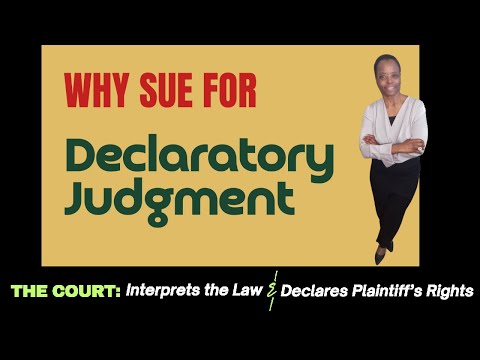
Declaratory relief is one of those legal terms that might sound super fancy but, at its core, it’s about clarity. It’s a way for someone to ask the court for a ruling that defines the rights, duties, or obligations of parties in a dispute. Imagine you’re in a situation where there’s confusion about what you can or can’t do under a contract or law. Instead of battling it out with motions and countersuits, you can request declaratory relief to get an official ruling.
So you might be wondering how this all actually works in practice. Let’s break it down.
What Is Declaratory Relief?
This type of relief usually comes into play before any actual harm occurs. For instance, if you’re worried your neighbor might claim part of your property because of an unclear boundary line, you could seek declaratory relief to clarify who owns what. The court would issue a ruling based on the facts and the law and help avoid future conflicts.
Declaratory Injunctions are closely related but have their own lane. While declaratory relief just clarifies rights and obligations, a declaratory injunction goes a step further by not only stating what should be done but also commanding a party to act or refrain from acting. Think about a business that wants to release a new product but is unsure if they’ll get sued over an existing patent. They can ask the court for both clarification on their rights and an injunction against potential litigation from competitors.
Key Situations for Using Declaratory Relief:
- Contract Disputes: When parties have different interpretations of contract terms.
- Insurance Claims: If an insurer denies coverage based on policy wording.
- Pension Benefits: When there’s uncertainty about eligibility or benefits between employees and employers.
- Paternity Issues: A parent can seek clarification regarding child support obligations without waiting for custody battles to unfold.
Think back to that time when your friend had that questionable car lease deal. They were worried they misunderstood their obligation about mileage limits—a classic case where declaratory relief would come in handy! By getting the court’s take on things before racking up fees or penalties, they could safeguard themselves against future headaches.
Now here’s something interesting: Declaratory relief doesn’t always go hand-in-hand with jury trials. Most times, these cases are resolved through judges because they’re more about interpreting laws than resolving factual disputes which is typically what juries are there for—like figuring out “did he do it?”
In legal practice, using declaratory actions helps streamline processes significantly. It allows parties to resolve issues without wading through lengthy litigation battles while providing legal certainty moving forward.
Remember how confusing all this can get? It’s like standing at an intersection with no signs—declaratory relief is your road sign telling you which way to go!
You know, the world of law can feel pretty overwhelming at times. One term that pops up now and then is “declaratory injunctions.” Sounds fancy, right? But what does it all really mean, and how does it tie into the jury system?
So, a declaratory injunction is a type of court order. It’s kind of like when you’re trying to settle a dispute, but instead of saying “you can’t do this,” you’re essentially asking the court to clarify what’s allowed or not. Picture this: You and a friend are arguing about who gets to use the last piece of cake. Instead of just grabbing it or pushing each other around, you go to someone who knows the rules—maybe a mutual friend—and have them clarify who gets it. That’s your declaratory judgment in action!
Now, how does this fit into the jury system? Well, both concepts exist within our legal framework to help maintain order and predictability. Jurors are tasked with interpreting facts and applying the law to those facts during trials. If there’s confusion about what exactly the law means—like if there are conflicting interpretations—it can make their job a lot tougher.
For example, imagine a case where two neighbors are battling over property lines. A declaratory injunction could be used to determine where that line actually lies before it ever goes before a jury for any kind of determination on damages or property issues. This is crucial because having clarity can steer jurors away from making decisions based on muddled legal questions.
But it’s not just about clarity; it’s also about justice! There was this one time I heard about someone who wanted to challenge their zoning restrictions but didn’t want to risk heavy penalties while waiting for their case to proceed through regular courts. A declaratory injunction offered them that lifeline by clarifying their rights without dragging them into an immediate battle.
So yeah, declaratory injunctions play an important role in ensuring that juries aren’t unnecessarily burdened with complex legal questions that could be straightened out ahead of time. It helps streamline things in courts and makes sure everyone knows what’s at stake before things really heat up.
In short, these legal tools work behind the scenes but have significant impacts on how cases unfold in front of juries—and ultimately help maintain fairness in our judicial system. Pretty cool stuff if you ask me!




