
The information provided in this article is intended solely for general informational and educational purposes related to U.S. laws and legal topics. It does not constitute legal advice, legal opinions, or professional legal services, and should not be considered a substitute for consultation with a qualified attorney or other licensed legal professional.
While efforts have been made to ensure the information is accurate and up to date, no guarantees are given—either express or implied—regarding its accuracy, completeness, timeliness, or suitability for any specific legal situation. Laws, regulations, and legal interpretations may change over time. Use of this information is at your own discretion.
It is strongly recommended to consult official sources such as the U.S. Government (USA.gov), United States Courts, or relevant state government and court websites before acting on any information contained on this website or article. Under no circumstances should professional legal advice be ignored or delayed due to content read here.
This content is of a general and informational nature only. It is not intended to replace individualized legal guidance or to establish an attorney-client relationship. The publication of this information does not imply any legal responsibility, guarantee, or obligation on the part of the author or this site.
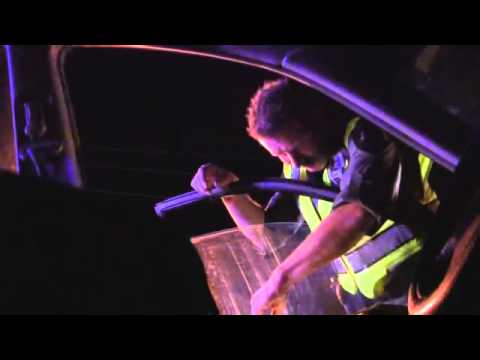
You know those nights when you’re just hanging out with friends? Maybe you grab a drink or two and then, bam, there’s a DUI checkpoint up ahead. It’s kind of nerve-wracking, right?
Well, here’s the thing. These checkpoints have sparked some serious debates in U.S. courtrooms. People are asking: Are they even legal? Do they actually keep us safer? You’ve got folks arguing on both sides.
Some think they’re necessary to catch drunk drivers. Others believe they infringe on our rights. It gets pretty heated!
So buckle up as we dive into the world of DUI checkpoints and how they’ve become a hot topic in courtrooms across the country. You’ll want to stick around for this ride!
Supreme Court Rulings on DUI Checkpoints: Legal Insights and Implications
Alright, let’s talk about those DUI checkpoints and what the Supreme Court has said about them. First off, DUI checkpoints are setups where police stop drivers to check if they’re driving under the influence of alcohol or drugs. You’ve probably seen them on a Friday night or holiday weekend.
Now, the legal side gets interesting. The Supreme Court has ruled on the constitutionality of these checkpoints, specifically looking at how they stand up against your Fourth Amendment rights. You know, the one that protects you from unreasonable searches and seizures?
In Michigan Dept. of State Police v. Sitz (1990), the Court okayed these checkpoints. They said that public safety concerns outweighed individual privacy rights in this case. Basically, they felt that stopping a few cars to prevent drunk driving helped keep everyone safer. So yeah, it sparked some serious debate about how much freedom you’re giving up for safety.
But here’s where it gets a little murky. Not every state has to follow this ruling strictly. Some states have their own sets of rules regarding how DUI checkpoints operate. For example:
- Notice: Some states require that authorities give advance notice of the checkpoint.
- Location: Certain states may restrict where these checkpoints can be set up.
- Duration: In some places, there are limits on how long a checkpoint can last.
So, if you find yourself in a state with strict rules on DUI checkpoints, it might feel different compared to another state where they operate more loosely.
Then there’s Brown v. Texas (1979), which added another layer by emphasizing that stops must also be based on reasonable suspicion—so officers can’t just stop anyone randomly without a valid reason.
And let’s not forget about Delaware v. Prouse, which reinforced that police should avoid arbitrary stops unless they have specific reasons to suspect wrongdoing.
With all this in mind, we see some implications for both law enforcement and drivers:
- For Law Enforcement: They need to follow established guidelines; otherwise, any evidence gathered at an improperly conducted checkpoint could get tossed out in court!
- For Drivers: If stopped at a checkpoint that’s poorly executed—like not following state laws—you might have grounds to challenge any charges against you.
In practice? Well, if you’re pulled over at one of these things and feel like something’s off—like no signs warning you beforehand—it might pay off to know your rights! Just remember: even though these checkpoints exist for safety’s sake, your rights still matter!
The legal landscape around DUI checkpoints isn’t black-and-white; it’s constantly evolving with new cases popping up and differing state laws making it all the more interesting (and sometimes confusing). But having this knowledge helps you stay informed about what’s happening in your area—and that’s no small thing!
Examining the Constitutionality of DUI Checkpoints: Legal Insights and Implications
DUI checkpoints, or sobriety checkpoints, have become a hot topic in legal circles. They’re designed to catch drunk drivers and enhance public safety. But what’s the deal with their constitutionality? Let’s break it down.
The Fourth Amendment protects you from unreasonable searches and seizures. At first glance, you might think DUI checkpoints violate this protection. After all, stopping cars without probable cause sounds kinda sketchy, right? Yet, courts have generally upheld these checkpoints as constitutional under specific conditions.
Essentially, the U.S. Supreme Court weighed in on this in 1990 with *Michigan Department of State Police v. Sitz*. The ruling stated that the state interest in preventing drunk driving outweighed the individual intrusion that a checkpoint causes. This means that while it’s intrusive to stop drivers without probable cause, the goal of reducing accidents justifies it.
Here are some key factors that courts consider when determining if a checkpoint is constitutional:
Now, even with these guidelines, challenges still pop up. Some states have stricter rules about DUI checkpoints than others do. For instance, California has specific regulations requiring law enforcement to plan and publicize their checkpoints in advance.
Imagine if you’re driving home after a night out with friends—one drink turned into two or three…you get the picture. Suddenly, there’s a checkpoint ahead. You get stopped and face some quick questioning—a couple of minutes feels like forever when you’re nervous! That’s part of why people argue against them: they create anxiety and can feel like an invasion of privacy.
Another point of contention is racial profiling at checkpoints. If certain groups see more stops than others based on race or ethnicity, it can stir up serious concerns about equality under the law.
But remember: while some folks see DUI checkpoints as an infringement on rights, others argue they save lives by keeping drunk drivers off the roads.
So where does this leave us? The constitutionality of DUI checkpoints often depends on how they’re executed and monitored by law enforcement agencies. If done right—with transparency and consideration for individual rights—they’re typically considered legal across many states.
DUI checkpoints really stir up a lot of emotions when you think about them. On one hand, they’re aimed at keeping roads safe and cracking down on drunk driving. I mean, it’s a pretty serious issue—one night out can lead to some pretty dangerous situations for everyone on the road. So, you can see why law enforcement wants to take action.
But here’s the thing: there’s this ongoing debate about whether these checkpoints infringe on people’s rights. Picture this—a group of folks out for a night out getting pulled over just because they drove through a certain area. The question comes up: are we sacrificing our personal freedoms for safety? Some argue that it’s an invasion of privacy, while others think it’s totally valid if it saves lives.
Just recently, I heard a story about a guy who got stopped at one of those checkpoints. He wasn’t even drinking but ended up in a bit of hot water because his car smelled like beer from a previous outing with friends. Talk about frustrating! He felt completely trapped by the system just doing its job, you know? He ended up challenging the checkpoint in court, claiming it was unconstitutional.
In courts across the U.S., judges have been weighing in on these challenges, trying to find that balance between public safety and personal liberties. Some rulings have backed the use of checkpoints under certain conditions—like proper signage and being in reasonable locations—while others have pushed back, saying that they can be arbitrary.
It gets complicated really fast because what works in one state might not hold up in another. It’s fascinating how each case brings its own little twist to the table! You’ve got different judges interpreting laws differently, making courtroom debates all the more intense.
I guess at the end of the day, DUI checkpoints reflect larger questions about how we govern ourselves and prioritize safety versus freedom. It’s tough to navigate that tightrope without losing sight of either side’s concerns. And honestly? That kind of makes it all feel like one big ongoing conversation we’re all part of—and maybe it means we need to keep talking and debating until we find something that feels right.




