
The information provided in this article is intended solely for general informational and educational purposes related to U.S. laws and legal topics. It does not constitute legal advice, legal opinions, or professional legal services, and should not be considered a substitute for consultation with a qualified attorney or other licensed legal professional.
While efforts have been made to ensure the information is accurate and up to date, no guarantees are given—either express or implied—regarding its accuracy, completeness, timeliness, or suitability for any specific legal situation. Laws, regulations, and legal interpretations may change over time. Use of this information is at your own discretion.
It is strongly recommended to consult official sources such as the U.S. Government (USA.gov), United States Courts, or relevant state government and court websites before acting on any information contained on this website or article. Under no circumstances should professional legal advice be ignored or delayed due to content read here.
This content is of a general and informational nature only. It is not intended to replace individualized legal guidance or to establish an attorney-client relationship. The publication of this information does not imply any legal responsibility, guarantee, or obligation on the part of the author or this site.
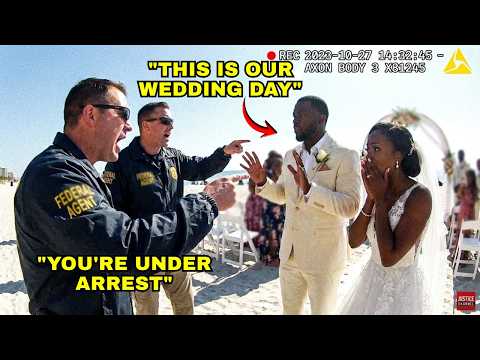
So, picture this. You’re just hanging out, living your life, when suddenly, the cops show up and pull you aside. Maybe it’s for something you didn’t even do. Yikes, right?
That’s what unlawful arrest is all about. It can mess with your life in ways you can’t even imagine. The thing is, a lot of people don’t really know their rights in these situations or what they can do about it.
And if it goes to trial? Well, that’s where juries come in. They’re the ones who get to decide if an arrest was legit or not. Pretty heavy stuff!
Let’s break down what happens when someone feels wronged by the system and how juries see it all unfold. This can really change your perspective on justice and how it works—or sometimes doesn’t work—here in the U.S.
Understanding the Graham v. Connor Case: Key Legal Insights and Implications
Well, let’s talk about the case of Graham v. Connor. This case is a big deal in the world of U.S. law, especially when we’re diving into issues around unlawful arrests and how juries see them. So, what’s it all about?
First off, Graham v. Connor came to light in 1989. The situation unfolded when a man named Dethorne Graham was stopped by police after he rushed to get orange juice for a diabetic episode. The police thought it looked suspicious since he was acting a bit erratic. What happened next led to some serious questions about how much force officers can use.
When the cops confronted him, things escalated quickly—like way too quickly. They ended up using physical force, pinning him down, causing injuries that were not cool at all. Graham claimed this was an unreasonable seizure under the Fourth Amendment which protects against unlawful search and seizure.
Now, here’s where it gets interesting! The Supreme Court had to decide if Graham’s treatment was justified based on what the officers knew at that moment—this is known as the “reasonable officer standard.” They concluded that an officer’s actions should be judged from the perspective of a reasonable officer on the scene rather than with hindsight.
Why is this important? Well, it basically laid down a huge principle regarding excessive force claims in policing:
- Reasonableness Standard: The court said you have to look at whether the officer’s actions were reasonable given the circumstances they faced.
- Totality of Circumstances: You can’t just focus on one part of what happened; you need to consider everything surrounding the situation.
- Subjective vs Objective: It’s more about what a typical reasonable person would think than what any individual might feel later.
This case really reshaped how courts handle claims of excessive force and wrongful arrest going forward. It signifies that juries will look closely at each case’s specifics when deciding if police used too much force.
So think about it—if you were on a jury deciding whether an officer acted reasonably or not in light of their training and experience during high-stress situations, you’d have to weigh those moments carefully! Your gut feeling might be different if you only saw part of what happened versus hearing all details presented during trial.
Ultimately, Graham v. Connor touches on core issues like civil rights and police accountability. It’s not just legal jargon; real people are affected by these decisions every day in courtrooms across America. Understanding these nuances can help clarify just how complex unlawful arrest cases can be and why having a thorough examination during jury trials is so crucial!
Understanding the Significance of John Bad Elk v. United States: Key Legal Implications and Historical Context
Understanding John Bad Elk v. United States is like peeling back the layers of an important moment in American legal history. This case, decided in 1900, does a couple of things: it highlights issues around unlawful arrests and gives us insight into how juries view these kinds of situations.
First off, let’s talk about what happened. John Bad Elk was a Lakota Sioux man who was arrested by a U.S. marshal. He was accused of killing a fellow tribesman during a fight. The twist? Bad Elk claimed self-defense, but he also argued that his arrest was unlawful because the marshal didn’t have proper authorization to take him in. This part is essential; it touches on the very nature of authority and law enforcement.
Key Implications for Unlawful Arrest Cases
The ruling in this case set some significant precedents concerning unlawful arrests:
So why should you care about this? Well, the court eventually ruled in favor of Bad Elk, overturning his conviction on appeal. The Supreme Court highlighted that there needed to be a reasonable basis for an arrest. This really mattered because it affirmed that individuals can challenge unlawful authority.
Now, let’s not skip over how juries fit into all this! Jurors play a huge role in deciding cases like these. When they hear the facts, they think about whether everything aligns with their understanding of justice and fair play.
The Jury’s Role
In unlawful arrest cases:
Juries are like mirrors reflecting society’s values at any given time. In Bad Elk’s case, they were likely influenced by current views on law enforcement and Indigenous rights—issues that were pretty hot topics back then (and still are).
Exploring the Significance of Atwater v. Lago Vista: Implications for Constitutional Rights and Law Enforcement Authority
Atwater v. Lago Vista is one of those landmark cases that really ruffled some feathers in the realm of constitutional rights and law enforcement authority. It’s all about what police can and cannot do, especially when it comes to making arrests.
In this case, *Joan Atwater* was pulled over for a minor traffic violation—like, seriously minor—because her kids weren’t wearing seatbelts. This led to her getting arrested, which seemed a bit over the top, right? But here’s the kicker: the Supreme Court ruled that police could arrest someone for *any* offense, even if it’s just a ticketable one.
So why does this matter? Well, it implies that law enforcement officers have pretty broad authority when it comes to making arrests. In Atwater’s situation, she argued that her Fourth Amendment rights were violated because her arrest was unreasonable. But the high court didn’t see it that way. They basically said if an officer has probable cause—even for something tiny—they can make that arrest.
This decision has big implications on how unlawful arrest cases are viewed under U.S. law.
Imagine you’re at a family picnic, and your kid runs into the street without looking. A cop pulls you over because your child isn’t buckled up in their seatbelt. You think it’s just a warning or a ticket, but instead—surprise! You’re being handcuffed and taken away. That situation feels wrong to many folks—and they’re totally justified in feeling uneasy.
The case has also shaped jury perspectives on unlawful arrests. When jurors are presented with cases like Atwater’s in court, they might think differently about what police are allowed to do based on the Supreme Court’s ruling. It becomes less about whether an action is right or wrong emotionally and more about whether there was probable cause.
In short, Atwater v. Lago Vista highlights some crucial balances between individual rights and law enforcement powers.
So next time you hear someone talking about their experience with law enforcement or sharing their thoughts on constitutional rights, remember Atwater’s experience—it’s not just a story; it’s part of our ongoing conversation about justice in America!
You know, when we talk about unlawful arrests, it can really get under your skin. I remember a buddy of mine—let’s call him Jake—who got pulled over just for hanging out with some friends late one night. The cops thought they looked suspicious, and before he knew it, he was in cuffs. Turned out there wasn’t anything shady going on; they just jumped to conclusions. So you see, the whole situation flipped his world upside down for a bit.
In the U.S., unlawful arrest cases are a big deal. Basically, an unlawful arrest happens when someone is detained without proper legal justification. It’s like being caught in a web when you didn’t even know you were in the spider’s territory! Law enforcement needs probable cause to make an arrest; otherwise, they’re just stepping on constitutional rights.
Now, if someone believes they’ve been unlawfully arrested, they might pursue a civil suit against the officers involved or their department. A jury then gets a front-row seat to all the drama—and let’s be real here: juries are pretty fascinating. They’re made up of people from all walks of life who bring their own experiences into the courtroom.
You might wonder how jurors view these cases. Some might feel sympathetic right away—like they can relate to being wrongly accused—while others could have their mindsets shaped by what they see on TV or read online about cops and crime. A jury’s perspective can color everything from how they interpret evidence to how much empathy they show toward plaintiffs or defendants.
The thing is, during a trial for an unlawful arrest case, jurors have to sift through conflicting stories and sometimes complex legal standards. They’re not just looking at whether someone was arrested unlawfully; they’re also considering if the officers acted reasonably based on what they knew at the time.
But here’s where it gets tricky: jury decisions often come down to feelings as much as facts. If you have jurors who resonate with Jake’s experience of being unfairly targeted—if they’ve felt that sting—they may lean more toward believing his side of things.
Still, there’s always that challenge of bias and preconceptions that comes into play in courtrooms across America. So many factors impact how people perceive justice—all mixed up in personal stories and societal narratives about law enforcement.
At the end of the day, unlawful arrests remind us that our rights matter—and so does fair treatment under the law. It’s a wild ride figuring out how many layers there are when it comes to justice served—or not served—in this country!




