
The information provided in this article is intended solely for general informational and educational purposes related to U.S. laws and legal topics. It does not constitute legal advice, legal opinions, or professional legal services, and should not be considered a substitute for consultation with a qualified attorney or other licensed legal professional.
While efforts have been made to ensure the information is accurate and up to date, no guarantees are given—either express or implied—regarding its accuracy, completeness, timeliness, or suitability for any specific legal situation. Laws, regulations, and legal interpretations may change over time. Use of this information is at your own discretion.
It is strongly recommended to consult official sources such as the U.S. Government (USA.gov), United States Courts, or relevant state government and court websites before acting on any information contained on this website or article. Under no circumstances should professional legal advice be ignored or delayed due to content read here.
This content is of a general and informational nature only. It is not intended to replace individualized legal guidance or to establish an attorney-client relationship. The publication of this information does not imply any legal responsibility, guarantee, or obligation on the part of the author or this site.
Hey, you know that moment when you’re grinding away at work and you’re not sure if you should’ve been paid extra for those late nights? Yeah, that’s where overtime exemptions come in.
So, what’s the deal with the Fair Labor Standards Act? It’s supposed to protect you from being underpaid or overworked. But here’s the kicker—there are certain jobs and situations that get a free pass on those overtime pay rules.
Sounds confusing, right? Well, don’t sweat it! We’ll break it down together. Whether you’re clocking in extra hours or just curious about your rights, understanding these exemptions is super important. Let’s dig into it!
Understanding FLSA Overtime Exemptions: Identifying Fully Exempt Worker Categories
Sure thing! Let’s break down the Fair Labor Standards Act (FLSA) overtime exemptions. This can get a bit tricky, but I’ll keep it straightforward for you.
The FLSA is a federal law that sets standards for minimum wage, overtime pay, and other important labor issues. Now, not all workers are covered by this law in the same way. Some categories of workers are considered exempt from receiving overtime pay. Here’s what you need to know about those “fully exempt” categories.
1. Executive Employees:
If your job mainly involves managing a business or a department, and you supervise two or more employees, you might be classified as an executive. You’ve got to make independent decisions and be in charge of hiring or firing employees too.
2. Administrative Employees:
These folks usually perform office or non-manual work that’s directly related to managing the business operations or general business activities. Think about someone who handles budgets or policies; this person needs to exercise discretion and independent judgment in their role.
3. Professional Employees:
This category typically includes people who hold advanced degrees or have specialized knowledge in fields like medicine, law, or accounting. If you’re using your intellect rather than physical labor to do your job, you might fit here.
4. Outside Sales Employees:
If your primary duty is making sales away from the employer’s place of business, like going out to meet clients at their locations, you’re probably considered exempt under FLSA rules.
5. Computer Employees:
Here’s where it gets a bit specific: if your role involves creating software or working on computer systems and you’re making over a certain salary threshold, you could be exempt too.
Now—here’s where it gets real: all these classifications have specific criteria. Just being a manager doesn’t automatically mean you’re exempt! You have to meet all the requirements outlined by the Department of Labor.
It’s also important to remember that salaries matter. Each of these exemptions comes with certain salary minimums that need to be met for someone to qualify as exempt from overtime pay.
So let’s say you’re an executive who earns $70k a year running a department at a tech firm—you’d likely fall under that exemption category since you’re directing operations and supervising others. But if you’re just working as an assistant there without those responsibilities? It’s a different story entirely!
In short, understanding FLSA overtime exemptions can save both employers and employees some serious headaches down the line—it helps everyone know their rights and obligations better! If there are any gray areas in how someone fits into these categories, it might just be worth chatting with HR—or getting some additional insight from someone who knows their stuff about labor laws!
Understanding FLSA Overtime Exemptions: Key Regulations and Implications for Employers
Alright, let’s talk about the Fair Labor Standards Act (FLSA) and those pesky overtime exemptions. If you’re an employer or just someone curious about how it all works, you’ve probably heard of these exemptions. They can be a bit confusing, but once you break them down, it becomes clearer. So, here’s the deal.
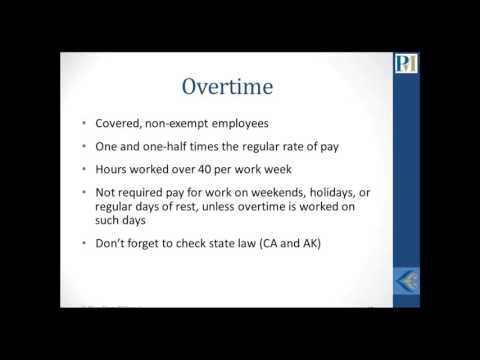
The FLSA is pretty much the law that sets standards for wages and hours worked. One of its main features is that it requires employers to pay employees overtime for any hours worked over 40 in a single workweek. But here’s where exemptions come in: not all employees qualify for this overtime pay.
Types of Exemptions:
- Executive Exemption: If you’re an executive, meaning your job primarily involves managing the company or a department and you supervise at least two full-time employees, you might be exempt. Plus, your salary has to meet a certain threshold.
- Administrative Exemption: This one applies if your job duties are office-based and involve exercising discretion over significant matters and helping run the business or operations. Basically, if you’re making important decisions, you could be exempt.
- Professional Exemption: This generally includes jobs that require advanced knowledge in fields like law or medicine. Think doctors or lawyers—lots of education involved there!
- Outside Sales Exemption: If your main job is making sales away from your employer’s place of business (like sales reps), this exemption might apply to you.
- Computer Employee Exemption: Tech people like software developers can also fall under this exemption if they meet specific criteria regarding their salary and job duties.
The salary threshold matters here too! To qualify for these exemptions, employees generally need to earn more than $684 per week (that’s around $35,568 annually) as of 2020. But remember—I’m talking about federal law; some states may have their own rules that are stricter than this.
Now let’s dig into some implications for employers since they’re the ones who really need to keep an eye on all this stuff. If you’re misclassifying an employee as exempt when they should really be non-exempt, that can lead to serious problems down the line.
Your business could end up on the wrong side of a lawsuit or face hefty penalties from the Department of Labor (DOL). Imagine dealing with back pay claims because someone didn’t get overtime when they should have! Not fun at all…
If you’re still unsure about someone’s classification? It might be worth having a chat with someone who knows their way around labor laws—or at least taking some time to read more about it yourself!
The Bottom Line:
Understanding FLSA overtime exemptions isn’t just important for compliance; it helps create fair workplaces too. Clear definitions help everyone know what to expect in terms of pay and hours worked—especially during busy seasons where things can get hectic!
The regulations can feel overwhelming sometimes. Just remember: stay informed, check your classifications regularly, and treat your employees fairly! That way everyone wins in the end.
Understanding Overtime Pay Exemptions: Who Qualifies and What You Need to Know
So, let’s chat about overtime pay exemptions under the Fair Labor Standards Act (FLSA). It sounds a bit legalistic, right? But stick with me; it’s important stuff for anyone working in the U.S. Basically, the FLSA sets standards for things like minimum wage and overtime. Overtime is when you work more than 40 hours in a week, and legally, you should be paid time-and-a-half for those extra hours. But not everyone gets that extra cash!
The thing is, there are certain categories of workers who are considered exempt from receiving overtime pay. So who are these lucky folks? Let’s break it down.
- Executive Employees: These are people who manage a business or a department. They usually have the authority to hire or fire employees and make decisions on significant matters. If you’re in this category, you’re likely exempt.
- Administrative Employees: This isn’t as straightforward as it sounds. Generally, these employees perform office or non-manual work related to management or general business operations. They need to exercise discretion and independent judgment too.
- Professional Employees: Think doctors, lawyers, and teachers—those whose jobs require advanced knowledge typically gained through higher education. If you’ve got a professional license or degree for your job, you might just be exempt!
- Salaried vs. Hourly: A quick note here: many of these exemptions apply to salaried workers rather than hourly workers. If you’re getting paid by the hour, chances are you’ll be entitled to overtime.
You might be asking yourself how much someone has to make to qualify for these exemptions. Well, generally speaking, if you make less than $684 per week, you’re probably going to get that sweet overtime pay regardless of your job title—unless there’s some state law that says otherwise.
Anecdote time! I once heard about this guy named Dave who worked as an IT manager at a big company. He thought he was doing great since he managed a small team and made decent money—but then he realized he was making just barely over that salary threshold! So every time he worked late fixing issues (which was often), all those extra hours? Yep—he wasn’t getting paid for them because his employer said he was “exempt.” Talk about frustrating!
If you’re thinking about whether you’re entitled to overtime pay or not—even if you think you’ve got an exemption—it might be wise to double-check with an HR person or even look up your state laws because they can differ from federal rules.
The bottom line is: understanding if you qualify for an overtime exemption can save you from missing out on some serious cash! Keep track of your hours and don’t hesitate to ask questions at work—you deserve clarity!
So, let’s chat about overtime exemptions under the Fair Labor Standards Act (FLSA). If you’ve ever worked more than 40 hours a week and get a little extra cash for it, you’re probably familiar with the whole overtime scene. But not everyone gets that sweet time-and-a-half pay, right? That’s where these exemptions come into play.
Basically, the FLSA has some specific rules that say who can be considered exempt from overtime pay. You’ve got your classic white-collar jobs—like executives, professionals, and administrators—who often fall under this category. But it’s not just about the job title; it’s about what you actually do every day.
Take my buddy Jake, for instance. He was working as a “manager” at a local retail store and thought he’d be rolling in the dough with all those hours he put in. But turns out, since his duties mostly involved ringing up sales and stocking shelves rather than actual management decisions, he wasn’t exempt after all. Bummer, right?
Now, to be considered exempt, you generally need to make a certain salary threshold too—currently set at $684 a week. If you’re not hitting that number or if your job doesn’t fit neatly into those duties outlined by the FLSA? Well, sorry but you might be entitled to overtime pay.
But here’s where it can get tricky. Employers sometimes misclassify employees just to save on those extra wages. It’s frustrating because folks like Jake rely on that paycheck to make ends meet. And when you’re counting on every dollar after putting in long hours? That misclassification can really hit hard.
So when you’re working those extra hours and wondering why your paycheck isn’t reflecting it, just know there’s a whole legal framework behind it that can make or break your earnings. It’s worth knowing your rights and maybe having a candid convo with HR if things seem off.
In the end, understanding these exemptions isn’t just for lawyers or HR pros; it’s crucial for anyone who works hard each week and wants fair compensation for all their effort!




