
The information provided in this article is intended solely for general informational and educational purposes related to U.S. laws and legal topics. It does not constitute legal advice, legal opinions, or professional legal services, and should not be considered a substitute for consultation with a qualified attorney or other licensed legal professional.
While efforts have been made to ensure the information is accurate and up to date, no guarantees are given—either express or implied—regarding its accuracy, completeness, timeliness, or suitability for any specific legal situation. Laws, regulations, and legal interpretations may change over time. Use of this information is at your own discretion.
It is strongly recommended to consult official sources such as the U.S. Government (USA.gov), United States Courts, or relevant state government and court websites before acting on any information contained on this website or article. Under no circumstances should professional legal advice be ignored or delayed due to content read here.
This content is of a general and informational nature only. It is not intended to replace individualized legal guidance or to establish an attorney-client relationship. The publication of this information does not imply any legal responsibility, guarantee, or obligation on the part of the author or this site.
Okay, so you know when you hear about a court case on TV? Those intense moments, right? Well, behind all that drama is this thing called Federal Civil Procedure Rule 56.
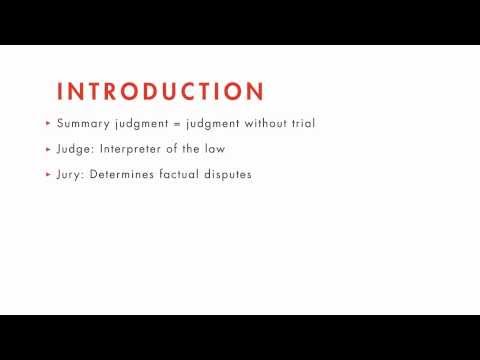
It’s all about summary judgment. Sounds fancy, huh? But really, it’s just a way to decide some cases without going through a full trial.
And then there’s the jury trial part. That’s when regular folks like you and me get to weigh in on the big decisions. It’s kind of a big deal!
So let’s break it down. I promise it won’t be boring!
Understanding Federal Rule of Civil Procedure 56: A Comprehensive Guide to Summary Judgment in Civil Litigation
Understanding Federal Rule of Civil Procedure 56 is super important for anyone getting into civil litigation. This rule deals with summary judgment, something that can really change the game in a lawsuit.
So, what’s summary judgment, anyway? Basically, it’s a way for one party to ask the court to decide a case or specific parts of it without going through a full trial. Sounds great, right? But there are some rules and steps you gotta follow.
First off, the party asking for summary judgment—let’s call them “the movant”—has to show that there’s no genuine dispute about any material fact. In plain speak, this means they need to prove that the facts aren’t up for debate. If there are facts that reasonable people could disagree about, you better be ready for trial.
This brings us to the evidence part. The movant has to present evidence in their motion. You can think of this as a big ol’ folder of proof: documents, affidavits, and anything else that supports their claim. But here’s the kicker: the other party gets to respond with their own evidence showing why there *is* a dispute over those facts.
Now let’s break down how this whole process works:
- Filing the Motion: The movant files a motion for summary judgment with supporting documents.
- Response: The opposing party has time (usually 14 days) to respond.
- Status Conference: Sometimes there’s a hearing where both sides present their arguments.
- The Judge’s Decision: After reviewing everything, the judge will either grant or deny the motion.
If granted, summary judgment can mean big wins because it can dispose of entire claims or defenses without needing a trial—and hey, saving time and money is always nice!
But remember my friend Jenna? She thought her case was solid until she faced summary judgment. She was convinced she had all her facts straight but didn’t realize she had overlooked some evidence that contradicted her claims. The judge granted summary judgment against her because Jenna couldn’t prove beyond doubt that any genuine issues existed.
So here’s something important: courts view evidence in favor of the party opposing the motion during this process. If there’s even one fact that’s disputed and could matter in deciding the case’s outcome, then it’s heading to trial.
In terms of jury trials? Well, if you get hit with summary judgment on your case—it means no jury will ever see it! That’s why understanding Rule 56 is crucial if you’re involved in civil litigation.
In short, Federal Rule of Civil Procedure 56 doesn’t just shuffle around paperwork; it’s like an express lane through legal traffic! And getting familiar with it can make all the difference between winning big or missing out altogether!
Understanding Rule 56 of Civil Procedure: Key Insights on Summary Judgment in Legal Practice
Alright, let’s talk about Rule 56 of the Federal Rules of Civil Procedure. This rule is all about **summary judgment**. You might hear this term thrown around a lot, and it’s pretty crucial in the legal world. So, what is it exactly?
Summary judgment is a way for a court to decide a case without going through the hassle of a full trial. When one party thinks there’s no genuine dispute over material facts—basically saying “Hey, the facts are clear; let’s skip to the end!”—they can file for summary judgment. It speeds up the process and can save everyone time and money.
So here’s how it goes down:
Here’s where it gets interesting—many cases actually get resolved at this stage! If you think about it, going through an entire trial can be exhausting—and not just for lawyers, but for jurors too. I mean, imagine showing up every day, listening to details of someone else’s life or conflict when you could be enjoying your coffee at home.
Now let me tell you something that really illustrates this point. There was this one case where two neighbors had an ongoing feud over property lines. They both insisted they were right and both were pretty stubborn about it. Instead of dragging everyone into court for weeks—where tempers would flare and emotions would run wild—they went straight for summary judgment. One neighbor presented solid evidence showing he owned more land than he claimed; basically made it clear that the other neighbor didn’t have a leg to stand on. The judge looked at everything presented and ruled in favor of one neighbor right away! No trial necessary!
So yeah, summary judgement isn’t just some legal jargon; it’s actually an efficient way to resolve disputes when possible.
But wait! It’s not always as straightforward as you’d think. Courts really scrutinize motions for summary judgment because they don’t want injustice served on a platter just because one side was quicker with paperwork or had deeper pockets.
In short, whether you’re *in* the courtroom or observing from afar—it helps to see how Rule 56 operates within our justice system and how vital **summary judgment** can be in speeding things along while still keeping justice front and center.
In case you’re wondering about jury trials—these are often held after motions like this are resolved or denied if there’s still substantial dispute left unresolved between parties. A jury will then step in when there’s enough material fact disagreement that needs someone other than just a judge making decisions.
So that’s Rule 56 in all its glory! A powerful little rule that keeps things running smoothly in our legal system while ensuring people get their day in court—when absolutely necessary!
Understanding Rule 56 Summary Judgment: Key Principles and Strategic Insights
When you hear about Rule 56, it might sound a bit technical, but hang tight. This rule is all about summary judgment in federal civil cases. Essentially, it allows a party to win their case without going to trial if there’s no genuine dispute on material facts. Let’s break that down a bit.
First off, you gotta know what a material fact is. It’s the kind of fact that could actually affect the outcome of the case. If there’s no real disagreement about these facts, courts can decide who wins based solely on the law. So if you think about it, it saves time and money for everyone involved.
The process begins when one party files a motion for summary judgment. They’re saying, “Hey, Your Honor! We don’t need to bother with a trial because this is straightforward.” They’ll usually include evidence like affidavits or documents to back up their claim.
Then comes the heart of it: the opposing party has to show there’s indeed a genuine issue of material fact that needs hashing out in court. If they can’t do that? Bam! The court could grant summary judgment in favor of the moving party.
Now, here are some key principles to keep in mind:
- Standard of Review: Courts look at evidence in the light most favorable to the non-moving party—meaning they assume everything they say is true.
- Evidentiary Support: A party must support their motion with evidence; mere allegations won’t cut it.
- Timing: There are specific timelines for filing these motions—usually after discovery has happened but before trial.
- Judicial Discretion: Judges have some wiggle room on whether or not to grant summary judgment based on what they see as fair and just.
A classic example? Imagine an auto accident case where one driver clearly ran a red light—there’s video evidence and eyewitness testimony supporting this. If the other driver tries to claim otherwise but has no solid proof backing their side, then Rule 56 could come into play big time.
Also worth mentioning is how strategic timing can be key here. Waiting too long or jumping too early with your motion could trip you up! It’s always wise to assess your situation carefully.
Just remember: Rule 56 streamlines things when there isn’t actually anything left for a jury to sort out—a real time-saver! Understanding this rule helps not only lawyers but also regular folks see how some cases just don’t need courtroom drama when the facts are as clear as day. Letting facts do most of the talking keeps things efficient and lets justice roll along smoothly!
Federal Civil Procedure Rule 56 can sound a bit, well, scary. It’s one of those legal terms that makes you think of huge courtrooms and thick books filled with rules. But hang on; it’s not as daunting as it seems.
So, Rule 56 is all about summary judgment. This is where one party tries to convince the court that there’s no need to go through a full trial because there aren’t any real disputes over the facts. Imagine someone saying, “Hey, we both agree on what’s happened here. Why waste time and money going to trial?” Pretty fair point, right?
Now, in a jury trial context, this is where things get interesting. In these cases, you’ve got jurors—the folks just like you and me—who are there to listen to both sides and decide what’s what. There’s something kind of cool about it: ordinary people taking part in the justice system and making calls on serious issues.
But under Rule 56, if a judge grants summary judgment before the jury gets involved, then that takes away their chance to weigh in at all! It’s like saying there’s no need for a game because the ref has already decided who wins based on the scoreboard alone.
Picture this: Let’s say two friends get into an argument over who borrowed whose lawnmower last summer. If they can’t settle it out themselves, they might take it to court. The judge could look at evidence—like text messages or photos—and say, “You know what? It doesn’t matter what you guys think; it’s pretty clear from this message that Bob borrowed Steve’s lawnmower.” And boom! No need for a jury trial because the facts were so obvious.
Sometimes this can feel unfair if you’re on the losing side of a summary judgment decision. You might want your day in court—the chance for jurors to hear your story and decide what really happened—but it doesn’t always play out that way.
And let me tell you from experience—many folks don’t realize how critical these early stages are in shaping the path their case will take. When emotions run high—as they often do—it can be tough to lose that opportunity for your peers’ judgment.
In essence, understanding Rule 56 isn’t just about memorizing legal jargon; it’s about recognizing how cases can be decided even before they reach that courtroom drama we often see on TV. And knowing this helps everyone prepare better for what might happen next in their legal journey—whether that’s fighting against a motion for summary judgment or gearing up for an actual jury trial where every piece of evidence counts!




