
The information provided in this article is intended solely for general informational and educational purposes related to U.S. laws and legal topics. It does not constitute legal advice, legal opinions, or professional legal services, and should not be considered a substitute for consultation with a qualified attorney or other licensed legal professional.
While efforts have been made to ensure the information is accurate and up to date, no guarantees are given—either express or implied—regarding its accuracy, completeness, timeliness, or suitability for any specific legal situation. Laws, regulations, and legal interpretations may change over time. Use of this information is at your own discretion.
It is strongly recommended to consult official sources such as the U.S. Government (USA.gov), United States Courts, or relevant state government and court websites before acting on any information contained on this website or article. Under no circumstances should professional legal advice be ignored or delayed due to content read here.
This content is of a general and informational nature only. It is not intended to replace individualized legal guidance or to establish an attorney-client relationship. The publication of this information does not imply any legal responsibility, guarantee, or obligation on the part of the author or this site.
So, let’s chat about something kinda tricky—federal versus state charges. You’ve probably heard these terms tossed around, but what do they really mean?
Picture this: you’re chilling with friends, and someone gets in trouble with the law. Is it a state thing or a federal thing? What’s the deal?
It can get super confusing! The laws are different, and the courts too. But here’s the kicker: they can overlap sometimes. Yup, that adds to the confusion!
Hang tight; we’ll break it down in simple terms. You’ll be equipped to tackle those law-related conversations without breaking a sweat!
Understanding the Key Differences Between Federal and State Charges in Criminal Law
So, you want to get a grip on the differences between federal and state charges in criminal law? Totally makes sense! It can be a bit confusing, but I’ll break it down for you in a way that’s easy to digest.
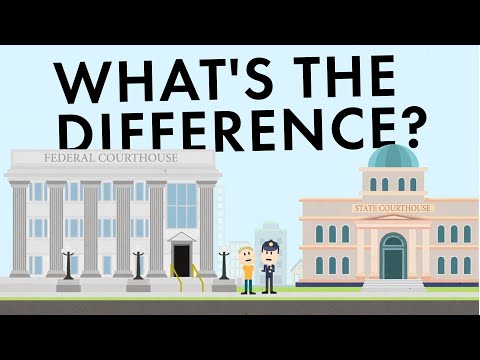
First off, the big picture: **federal charges** and **state charges** are prosecuted at different levels. Federal charges involve violations of federal laws, while state charges deal with violations of state laws. You got that? Cool!
Now let’s dive a little deeper:
Jurisdiction: This is a fancy word for where a case can be tried. Generally, state courts handle most criminal cases because they deal with local laws. Federal courts only get involved when someone breaks a federal law, like trafficking drugs across state lines or committing bank fraud.
Types of Crimes: Some crimes fall under both federal and state jurisdictions. For example:
- Theft: If you steal from a store down the street, that’s state theft. But if you hack into a bank in another state and steal money online—that’s federal.
- Murder: Each state has its own laws about murder; that falls under state jurisdiction. But if it involves things like terrorism or certain murders on federal property, then it’s federal.
Punishments: Generally speaking, penalties for federal crimes tend to be stiffer than those at the state level. Let’s say you’re charged with drug trafficking:
- A state-level charge might lead to several years in prison depending on the amount.
- A federal charge? You’re likely looking at harsher sentences—think mandatory minimums. If it involves large quantities or specific drugs, your time behind bars could be way longer.
Trial Process: The trial process can differ too! Federal cases usually have more formal procedures:
- Juries: In federal court, juries are usually made up of 12 people who have to reach an unanimous decision.
- Evidentiary Standards: The standards for evidence might be stricter in federal court. You may find that procedures around how evidence is obtained are often tightly regulated.
Now here’s an interesting little tidbit: sometimes cases can overlap! You might find yourself facing both federal and state charges for the same incident—known as “dual sovereignty.” This means each government can pursue its own case without stepping on each other’s toes.
So there you have it! Understanding these key differences is important because they can seriously affect everything from your rights during arrest to potential penalties if convicted. Just remember: local earns its stripes in the trenches of daily life while federal takes on those big national issues—so choose your battles wisely!
Understanding the Impact: State vs. Federal Charges and Their Consequences
Sure! Let’s dig into the differences between state and federal charges within the American legal system. Honestly, it can feel a bit like trying to figure out what’s on the menu at a fancy restaurant—there’s a lot to consider.
Different Jurisdictions
The main difference between state and federal charges is where the crime happened. State laws cover things that occur within state lines, while federal laws deal with offenses that cross state borders or violate federal law. So, if you rob a bank in your hometown, that’s usually a state issue. But if you transport stolen money across state lines? That’s where the feds come in.
Types of Crimes
Although many crimes are prosecuted at both levels, some crimes are more commonly associated with one than the other. For instance, things like murder or theft are generally handled by states. In contrast, federal charges often involve drug trafficking, immigration violations, and terrorism-related offenses.
Punishments
Now let’s talk consequences because this is where it gets real. Penalties differ significantly between state and federal systems. Federal sentences tend to be longer—and generally stricter—than state penalties for similar offenses.
- State Punishments: Depending on the crime’s severity, you could face anything from probation to years in prison.
- Federal Punishments: Federal cases often involve mandatory minimum sentences that can keep people behind bars for decades.
Imagine someone caught with a small amount of drugs in their pocket getting hit with just community service on a state level while another person busted for trafficking those same drugs across multiple states might end up in prison for years.
Court Procedures
The court systems are also different. State courts handle millions of cases each year dealing with various issues from family disputes to criminal offenses.
Federal courts? Well, they handle fewer cases but those cases usually have more serious stakes involved. They also follow different procedural rules which can be quite complex.
Anecdote Time!
I once knew this guy who thought he could get away with selling fireworks that were illegal in his state—but they were legal federally! Sounds silly right? He ended up facing both *federal* and *state* charges because he crossed those jurisdictional lines without realizing it.
In short, dealing with either kind of charge can be super complicated! It really matters whether you’re looking at something from the state level or if it’s gone up to federal jurisdiction—each comes with its own set of rules and potential outcomes. It’s not just about what you’ve done; it’s where you’ve done it that counts!
Understanding the Key Differences Between Federal and State Law: A Comprehensive Guide
When you think about law and order in the U.S., it’s really important to know there’s a big difference between federal and state law. While they both hold weight, they operate in different arenas. Let’s break this down, alright?
First off, federal laws are created by the national government. These laws apply across the entire country. They deal with issues that affect everyone, like immigration, federal taxes, or interstate commerce. On the flip side, state laws are crafted by individual states and only apply within those state lines—things like marriage laws, traffic rules, or criminal offenses.
Jurisdiction is another key difference. Federal courts have jurisdiction over cases involving federal laws. Think about serious stuff like drug trafficking across state lines or crimes that happen on federal property—those go to federal court. State courts handle local matters. So if someone steals a car in their hometown? That’s likely going to a state court.
The penalties can also vary widely. Federal crimes typically carry stiffer penalties than state offenses. For example, a drug offense might lead to five years in prison at the federal level but could have lesser consequences under state law depending on the situation.
- Types of Cases: Federal courts deal with things like copyright infringement or immigration violations; state courts might see cases for petty theft or family law disputes.
- Law Enforcement: Federal agencies like the FBI or DEA enforce federal laws; meanwhile, your local police department handles violations of state and local laws.
- Court Structure: The federal court system is more hierarchical with its district courts and appellate levels up to the Supreme Court; state systems can vary widely from one state to another.
An interesting thing happens when someone is charged federally and at the state level for the same crime—it’s called dual sovereignty. It means you can be tried twice for basically the same act without violating double jeopardy rules because you’re being charged by two different legal systems.
Anecdote time! Imagine a guy named Mike who gets caught robbing a bank in Texas. If he takes off with money across state lines into Louisiana, he could be looking at both federal charges, since it involves interstate robbery, and state charges, because he broke Texas law too! That’s pretty intense when you think about it!
The bottom line is that understanding these differences helps you grasp how justice works on different levels—local vs national—and why it matters. Whether it’s your neighbor’s speeding ticket or a high-profile fraud case coming from Washington D.C., both play vital roles in keeping things running smoothly (or not) in America.
So, here’s the deal with federal and state charges in the American legal system. It can get a bit complicated, but let’s break it down.
You’ve got two levels of law enforcement: federal and state. Federal charges are like the big bosses—they deal with things that cross state lines or affect the country as a whole. Think drug trafficking across states or crimes like bank robbery. State charges, on the other hand, focus on local issues—stuff happening within your state’s borders, like a bar fight or shoplifting at your local store.
Now imagine this: You’re sitting in a coffee shop, and you overhear someone talking about how they got charged with both federal and state offenses for something they did. Maybe they were selling drugs online nationally. This person could be facing serious consequences because federal laws usually come with heavier penalties than state laws. It’s like getting hit by two lightning bolts instead of one!
What makes it even more interesting is that some crimes can be prosecuted at both levels—for instance, if someone commits a crime that breaks both state law and federal statutes. So you might end up in both courts! Crazy right?
The process is different too; federal cases are usually handled in U.S. District Courts and have stricter rules—like the burden of proof being higher sometimes. But hey, each state has its own set of rules! It feels a bit like navigating through a maze sometimes.
All this to say, it truly reflects the diversity of our legal system. Some people think it’s pretty clear-cut; others say it’s overwhelming…but maybe it’s all just part of what makes the U.S. legal framework unique? You know, every time I hear stories about these overlapping jurisdictions, I can’t help but think of how crucial it is to understand where you stand legally if you ever find yourself in hot water!




