
The information provided in this article is intended solely for general informational and educational purposes related to U.S. laws and legal topics. It does not constitute legal advice, legal opinions, or professional legal services, and should not be considered a substitute for consultation with a qualified attorney or other licensed legal professional.
While efforts have been made to ensure the information is accurate and up to date, no guarantees are given—either express or implied—regarding its accuracy, completeness, timeliness, or suitability for any specific legal situation. Laws, regulations, and legal interpretations may change over time. Use of this information is at your own discretion.
It is strongly recommended to consult official sources such as the U.S. Government (USA.gov), United States Courts, or relevant state government and court websites before acting on any information contained on this website or article. Under no circumstances should professional legal advice be ignored or delayed due to content read here.
This content is of a general and informational nature only. It is not intended to replace individualized legal guidance or to establish an attorney-client relationship. The publication of this information does not imply any legal responsibility, guarantee, or obligation on the part of the author or this site.
So, let’s chat about something that might sound a bit boring at first but is actually kind of fascinating: implied contracts. You know, those agreements that aren’t written down but still hold water in the eyes of the law?
Yeah, it’s true! Imagine you go to a coffee shop and get a latte. You didn’t sign anything, but you definitely expect that latte for your cash, right? That’s like an implied contract in action!
Now, sprinkle in the jury system, and things get even more interesting. Juries decide how these implied agreements play out in real life. It can make or break a case. Isn’t that wild?
Stick around because we’re diving into how this all works and why it matters to you—really.
Understanding the Enforceability of Implied Contracts in Court
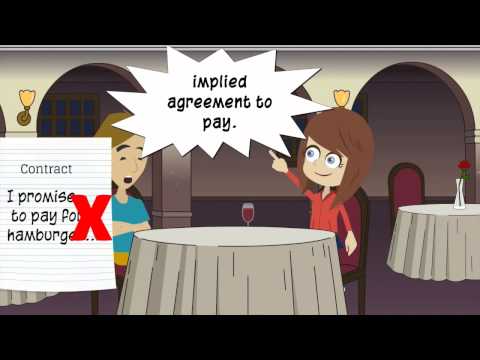
Understanding the enforceability of implied contracts can be a bit tricky, but let’s break it down. So, an implied contract is a kind of agreement that isn’t written down or verbally stated. Instead, it’s formed by the actions or circumstances surrounding it. You know how sometimes you go to a restaurant and order food? When you sit down and eat, there’s an implied contract that you’ll pay for that meal—even if you didn’t sign anything. It all comes down to the expectation of both parties.
In U.S. law, there are two main types of implied contracts: implied-in-fact and implied-in-law.
Implied-in-fact contracts arise from the actions or conduct of the parties involved. Basically, if your actions suggest that you agree to certain terms, a court might recognize an implied contract. Imagine two neighbors helping each other during snowstorms; if one neighbor helps clear snow from the other’s driveway without asking for payment, they might have an implied agreement based on their past exchanges.
On the flip side are implied-in-law contracts, often called “quasi-contracts.” This is where a court steps in to prevent unfairness, even if no formal agreement existed. Like, let’s say someone accidentally receives your package meant for them. If they keep it without informing you, a court might require them to return it because keeping your package isn’t fair—you expected them to do the right thing.
Now let’s talk about what happens when these implied contracts get challenged in court. For enforceability, here’s what courts usually look at:
- Offer and acceptance: Even without formal words, did both sides act in ways that suggest they agreed?
- Mutual consent: Did both parties understand and accept these terms through their behavior?
- Lack of express agreement: Was there any written or verbal contract? If not, is there enough evidence to show a mutual understanding?
- Circumstances: What were the conditions surrounding this situation? Context really matters!
It’s not just about having good intentions; clarity is key! Let’s say two buddies agree at dinner that one will pay for drinks this time while the other gets food next time—they’ve created this unspoken understanding through action over time.
When cases come up regarding implicit contracts in front of a jury, they can get pretty intense! Juries are left with examining those behaviors and interactions closely—a bit like detectives piecing together clues at a crime scene. The emotional weight can be significant too because personal relationships often hang in the balance.
So yeah, while enforceability can be complicated depending on context and specifics of each case—it boils down to whether there was truly an understanding between both parties backed by their actions or circumstances surrounding their relationship. And courts typically work hard to make sure no one gets unfairly taken advantage of—whether it’s through things like quasi-contracts or recognizing those implied agreements based on conduct alone.
Just remember: implied contracts may not be as straightforward as having something written down but can hold up under scrutiny in court if there’s enough evidence pointing towards mutual consent!
Understanding the Three Essential Requirements of an Implied Contract
An implied contract, you know, it’s not as complicated as it sounds. It’s basically a way for the law to recognize agreements that aren’t written down but are understood by the parties involved through their actions or circumstances. So, let’s break down those essential requirements that help form an implied contract in U.S. law.
1. Mutual Assent
This is fancy talk for saying both parties have to show they agree to the deal. It’s not like someone sends you a formal letter saying “You owe me $100,” and you say nothing back. Instead, think about situations where you go into a coffee shop, order a latte, and pay up without signing anything. Your action of ordering and paying shows mutual assent.
2. Consideration
Okay, so here’s where things get interesting. Consideration means there has to be something of value exchanged between the parties. It doesn’t always have to be money; it can be services or goods too! Imagine you’re helping your neighbor mow their lawn because they’ll cook dinner for you later on. You’ve both given something up—your time and effort versus a home-cooked meal.
3. Circumstantial Evidence
Now this one’s a bit more about what happens around the agreement rather than in it directly—what’s hinted at through actions rather than spoken words. Let’s say you’re at a car repair shop and the mechanic starts fixing your car because you’ve been there before and he knows you’ll pay after the work’s done. Your past behavior creates an expectation—everyone understands that by leaving your car there, you’re agreeing to pay for repairs.
In courts, these elements can get scrutinized pretty closely if there’s ever a dispute over whether an implied contract existed or not. You might hear judges talk about “the reasonable person standard,” which simply means if a reasonable person in your shoes would understand that there was an agreement based on those actions, then boom! You’ve got an implied contract!
Overall, while you might not write everything down when doing business or even everyday transactions—the law recognizes those unspoken agreements when they meet these three essential requirements!
Understanding Court Interpretations of Implied Contracts: Key Insights and Case Law
Implied contracts can be kinda tricky to wrap your head around, you know? Basically, they’re not written down, but they still can hold a lot of weight in court. Let’s break this down a bit.
So, what is an implied contract? Well, it’s an agreement that you can figure out based on the actions or circumstances of the involved parties. Unlike explicit contracts that are clearly stated in writing or verbally agreed upon, implied contracts arise from your behavior and interactions.
There are two main types of implied contracts:
- Implied in fact: This is formed by your conduct. For instance, if you go to a restaurant and order food, there’s an understanding that you’ll pay for that meal even if no one explicitly says so.
- Implied in law: Also known as a quasi-contract. This isn’t about mutual assent but rather protecting someone from being unjustly enriched. Imagine you get rushed to the hospital unconscious; the hospital treats you even though you didn’t sign anything beforehand.
Now, let’s chat about how courts interpret these things. Courts look at multiple factors to determine whether an implied contract exists. They consider context—what was happening at that time? What signals were sent? You know how sometimes a handshake means more than words?
A really well-known case here is **Lucy v. Zehmer** (1954). In this situation, two guys were at a bar—one jokingly offered to sell his farm for $50,000 while they were drinking whiskey. They ended up writing their agreement on a napkin! The court ruled that even if one guy was just kidding around, the intention was clear enough to enforce it as an implied contract because of their behavior.
Another interesting case is **Corpe v Overton** (1833). In this one, it revolved around services rendered without an official contract being signed first because both parties’ actions suggested an agreement existed.
Why is this important? Understanding how courts interpret implied contracts helps everyone navigate relationships—whether personal or business-related—with some clarity and protection regarding expectations.
One thing to keep in mind is that juries often play a role when disputes over implied contracts hit the courts. Their job is to decide whether enough evidence exists showing that both parties behaved in ways indicating they had an agreement—even without any formal paperwork.
So yeah, what it boils down to is this: implied contracts can be just as binding as written ones. The key takeaway here? Your actions matter—sometimes even more than your words!
So, let’s talk about implied contracts, right? You might have heard the term floating around but not really know what it means. It’s like when you think you have an agreement without actually writing it down or shaking hands. You just get it—like when you go to a restaurant and order food. You know they’re going to serve you a meal, and you’re expected to pay for it without anyone having to spell it out.
Now, in U.S. law, there are two kinds of implied contracts: one that’s based on actions—when your behavior suggests an agreement—and another that’s based on the circumstances—like how people usually act in certain situations. For instance, if you’re at a car repair shop getting your brakes fixed, it’s implied that you’re going to pay for the service once it’s done, even if you didn’t sign anything.
It’s interesting how these unspoken agreements tie into the jury system, isn’t it? When a case goes to court over an implied contract dispute, jurors are tasked with figuring out whether a contract even existed in the first place based on the evidence they see and hear. They look at actions and behaviors rather than hard-core paperwork. It’s kind of like putting together a puzzle where pieces don’t exactly fit neatly together.
I remember this story about a friend who bought a used car from someone who looked perfectly trustworthy but didn’t say anything about some big issues with the engine. My friend assumed everything was good since he’d been shown all these great features and taken for a test drive. Long story short—car broke down two weeks later! When my friend tried to take legal action, he found himself wrapped up in discussions about whether there was an implied contract based on their interactions.
The jury had to decide if my friend could reasonably assume his understanding was correct when no one explicitly mentioned those issues. It’s wild how human interaction can lead to such big consequences in law! Juries play this crucial role of sifting through those social cues and deciding how far those unspoken agreements go.
So basically, implied contracts remind us that sometimes things aren’t written down but still matter deeply—and juries help make sense of that messy human reality when disputes arise. It’s all pretty fascinating stuff when you think about how we rely on each other in everyday life!




