
The information provided in this article is intended solely for general informational and educational purposes related to U.S. laws and legal topics. It does not constitute legal advice, legal opinions, or professional legal services, and should not be considered a substitute for consultation with a qualified attorney or other licensed legal professional.
While efforts have been made to ensure the information is accurate and up to date, no guarantees are given—either express or implied—regarding its accuracy, completeness, timeliness, or suitability for any specific legal situation. Laws, regulations, and legal interpretations may change over time. Use of this information is at your own discretion.
It is strongly recommended to consult official sources such as the U.S. Government (USA.gov), United States Courts, or relevant state government and court websites before acting on any information contained on this website or article. Under no circumstances should professional legal advice be ignored or delayed due to content read here.
This content is of a general and informational nature only. It is not intended to replace individualized legal guidance or to establish an attorney-client relationship. The publication of this information does not imply any legal responsibility, guarantee, or obligation on the part of the author or this site.
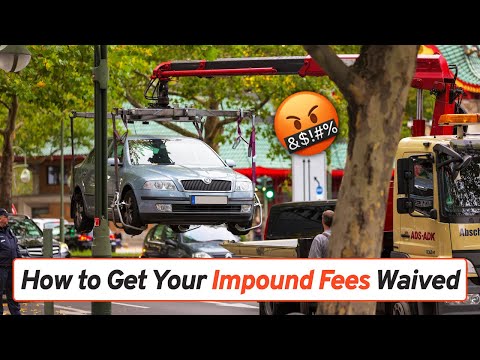
Okay, so picture this. You’re driving home one night, pretty relaxed, and suddenly you see those flashing lights behind you. Your heart races, and before you know it, your car’s getting towed. Ugh, right?
Now, let’s talk about what that means for you—specifically those pesky impounding fees. Seriously, they can hit you hard in the wallet.
It’s like a punch in the gut when you realize how much it costs just to get your car back. But don’t worry! Let’s break it down together. We’ll tackle what those fees are all about and why they exist. Spoiler alert: it’s not just a money grab!
Stick with me as we navigate this maze of legal stuff together—so you’re ready if it ever happens to you!
Understanding Your Options: What to Do If You Can’t Afford Impound Fees
So, you’ve found yourself in quite the pickle. Your car got impounded, and now you’re staring at those hefty impound fees. If your budget’s tighter than a drum, don’t sweat it. There are options out there.
First off, know what you’re up against. Impound fees can vary widely depending on where you live and the reason your car got towed in the first place. These fees can pile up pretty fast with daily storage costs, plus the initial towing fee. It’s like getting hit with surprise charges that just ruin your whole day.
Negotiate with the tow company. Seriously! Sometimes, if you explain your situation and show them you’re struggling to pay the fees, they might offer a discount or let you set up a payment plan. They’re running a business too, and every little bit helps for them as well.
- Payment plans: Some tow companies may allow you to pay over time instead of shelling out all that cash upfront. Just make sure to get any agreement in writing so there are no surprises later!
- Reduced fees: Don’t hesitate to ask if they have any programs for low-income individuals or hardship cases.
If negotiations don’t work out or feel intimidating, check local assistance programs. Many communities have organizations that help people facing financial difficulties, especially related to transportation issues.
- Nonprofits: Local charities might have funds set aside specifically for helping folks pay off impound fees—definitely worth looking into!
- Crisis assistance services: Some local governments offer one-time grants or emergency funds for people who can’t afford basic expenses.
You also wanna snoop around for legal aid. If negotiating feels like climbing Mount Everest without gear, consider reaching out to a legal aid organization in your area. They often provide free or low-cost assistance and can guide you on how to fight those fees if they seem unreasonable or unlawful.
If all else fails, think about public transportation while you try to sort things out. Losing your car is stressful enough; adding financial strain isn’t gonna help anyone’s sanity. Look into bus routes near where you live; sometimes it’s just a temporary detour until things stabilize again.
The whole situation is overwhelming, I get that. You might feel like life just threw another curveball your way! But remember: it’s not hopeless—there are paths forward without breaking the bank! Just take each step as it comes and stay informed about what options are available.
Understanding the Legal Reasoning Behind Vehicle Impoundment: Key Insights and Implications
Vehicle impoundment can be a frustrating experience, and understanding the legal reasoning behind it is pretty crucial. When your car gets towed, there are generally a few reasons why this happens. Let’s break it down.
First off, law enforcement agencies usually impound vehicles for specific reasons. This could include situations like driving without a valid license, being involved in a crime, or the vehicle being deemed unsafe for the road. If your car’s parked illegally—like in a no-parking zone—that’s another reason it might get towed.
Many people don’t realize that there are legal guidelines that dictate when and how an officer can impound a vehicle. Typically, these guidelines vary by state but often require that the officer has reasonable grounds to believe that the vehicle poses some kind of risk or is connected to illegal activity.
Another important factor is what happens after the vehicle is impounded. The agency responsible usually has to notify you about where your car is and how you can retrieve it. This notification process can differ based on local laws. You might get called directly, or they may post a notice on your windshield if it’s still there.
Now let’s talk about impounding fees. These can add up quickly and often depend on several factors including where the vehicle was towed and how long it stays in the impound lot. Generally speaking, daily fees accumulate while your car sits there.
You might wonder why these fees exist at all. Well, think of them as covering costs associated with towing services and storage facilities—it’s not just about getting your ride back; it’s also about maintaining public order. If you think about how many cars get towed daily, those fees help keep things running smoothly.
Also worth noting is that not all states have the same rules governing these fees. In some areas, you may be able to challenge the legitimacy of an impoundment if you believe it was done unfairly or unlawfully—you know? Like if you parked somewhere properly but still got towed for no good reason.
So when you’re hit with those hefty fees after retrieving your vehicle, remember that understanding why your car was impounded doesn’t just ease frustration; it might even pave the way for fighting back against unjust charges.
In summary, whether you’re dealing with legal issues over impoundment or simply trying to stay informed about why vehicles get taken away in the first place, knowing the ins and outs of this situation helps make sense of what can feel like a chaotic process! So next time you’re faced with this scenario—or if someone else brings it up—you’ll be ready to explain what’s really going on behind those towing trucks!
Understanding Impoundment in the Court System: Definition and Implications
Sure thing! Let’s talk about impoundment in the court system and what it means for you.
What is Impoundment?
Impoundment is basically when a court locks up certain documents or evidence related to a case. So, imagine you’re in the middle of a legal battle, and some sensitive information comes up. The court might decide to keep that info hidden from the public eye.
When does it happen?
You’d usually see this in cases involving trade secrets or personal privacy issues. For instance, say there’s a divorce case where one spouse has financial documents that could really embarrass the other. To protect privacy, the court might impound these records.
The Process
Now, how does this work? If someone wants documents impounded, they usually have to file a motion with the court. The judge then considers whether keeping the info private serves a good purpose.
- Privacy: Protecting personal details from becoming public.
- Safety: Keeping sensitive information away from potential harm.
If approved, those documents are off-limits to everyone except specific people involved in the case.
The Fees Factor
Let’s chat about impounding fees. When you ask for something to be impounded, some courts may charge you fees for handling those documents correctly. You might think of this as a kind of administrative cost.
The Implications
So what does this mean for you? Well, if your case involves impoundment, it could slow things down quite a bit—and those fees can add up! You might end up paying just to keep certain details private while waiting for the court’s decision.
And honestly? It can feel frustrating if you’re on either side of this issue. If you’re trying to keep something under wraps, or if you’re on the outside wanting access, just know that it’s all about balancing privacy with transparency.
Remember too that once something is impounded, it can be really hard to get at it later—like trying to dig through a locked box without the key!
Overall, understanding impoundment gives you an insight into how serious courts take confidentiality and privacy issues in legal cases. It’s part of protecting people’s rights while navigating through all those complex layers of law!
You know, impounding fees can be a bit of a maze. It’s not exactly the kind of thing you think about until it affects you directly. I remember my friend Jake had his car towed last summer. Long story short, he parked in the wrong spot for just a few minutes while he ran into a store. When he came back out, his car was gone! The look on his face was priceless and honestly, pretty heartbreaking too.
So, the thing is, when your vehicle gets impounded, you’re not just dealing with the inconvenience of not having your wheels. There’s also a financial hit coming your way in the form of those pesky impounding fees. Basically, these are charges you have to pay to get your car back from the tow yard. They can vary by location but often include towing costs and daily storage fees that add up fast if you don’t act quickly.
Each city or county has its own regulations about how much they can charge for these services. Some places are more lenient than others while some really hit hard with their fees! It’s like they’re banking on people being forgetful or just not having the means to get their ride back right away.
What really gets me is how easily people get trapped in this mess without understanding what it all means. Imagine someone who’s already struggling financially; they might end up paying way more than expected just because they didn’t know their rights or didn’t realize how quickly those storage fees accumulate.
In cases where cars are towed wrongfully—like if there were no clear signs indicating parking restrictions—people can actually fight those charges. They just need to gather evidence and sometimes even take it all the way to court.
So yeah, understanding impounding fees isn’t just about knowing prices; it’s about navigating an entirely new layer of stress when something unexpected happens! If you find yourself in this situation, always check local laws and maybe talk to someone who knows what they’re doing before shelling out cash like it’s no big deal. You never know, you might save yourself some money—or at least some headaches—down the line!




