
The information provided in this article is intended solely for general informational and educational purposes related to U.S. laws and legal topics. It does not constitute legal advice, legal opinions, or professional legal services, and should not be considered a substitute for consultation with a qualified attorney or other licensed legal professional.
While efforts have been made to ensure the information is accurate and up to date, no guarantees are given—either express or implied—regarding its accuracy, completeness, timeliness, or suitability for any specific legal situation. Laws, regulations, and legal interpretations may change over time. Use of this information is at your own discretion.
It is strongly recommended to consult official sources such as the U.S. Government (USA.gov), United States Courts, or relevant state government and court websites before acting on any information contained on this website or article. Under no circumstances should professional legal advice be ignored or delayed due to content read here.
This content is of a general and informational nature only. It is not intended to replace individualized legal guidance or to establish an attorney-client relationship. The publication of this information does not imply any legal responsibility, guarantee, or obligation on the part of the author or this site.
Hey there! So, let’s chat about something pretty wild in the legal world—justification defenses. You know, those moments when someone does something that technically breaks the law but feels totally reasonable? Yeah, it’s a thing!
Imagine being in a situation where you have to decide between doing what’s “right” and what’s “lawful.” It’s like a real-life moral dilemma. You can see how emotions run high and choices get complicated!
In this little journey, I’m gonna share some real-life examples of how folks have used this defense in court. It’s fascinating stuff! I mean, who hasn’t been in a sticky situation where they felt justified? Trust me; you’ll find these stories pretty gripping. Buckle up!
Understanding Justification Defense: Key Examples and Legal Insights
Sure! Let’s chat about the **justify defense**, a pretty interesting part of U.S. law that can sometimes make all the difference in a case. Basically, this defense argues that a person had good reason to commit what would normally be a crime. It’s all about circumstances, right?
What is Justification?
Justification means you did something that seems wrong but was actually justifiable given the situation. For instance, if someone breaks into your house and threatens you, and you fight back—well, that could be justified self-defense, right? In these scenarios, the law acknowledges that sometimes actions taken during stressful or dangerous situations can be excused.
Key Examples of Justification Defense
Let’s break this down with some real-life examples:
The Fine Line
Now here’s where it gets tricky… just because you’re claiming justification doesn’t mean you’ll automatically win in court. The key is proportionality; basically, did your response match the threat? If someone pushes you and you pull out a knife? That may not fly.
Remember that each jurisdiction has its own laws about how justification works. Sometimes they have specific rules on when it’s acceptable to use force or even how much force you’re allowed to use.
Court Interpretations
Courts often look at factors like:
Often juries need to think deeply about these elements before making their decision.
A Real-Life Scenario
Think about this story: A man walks into a convenience store and sees someone pointing a gun at the cashier demanding money. He knows he could intervene because he has training in self-defense techniques. He tackles the robber and disarms him. Here’s where it gets interesting—he could argue he acted out of necessity and in defense of another person (the cashier).
But let’s say he tackled him too hard or continued hitting him after he was already subdued; then things change again! The courts would have to consider whether his reaction was justified or excessive.
Overall, understanding justification defenses can really change how we see certain incidents in legal terms. It highlights how our laws allow for human emotions and reactions under pressure while maintaining order and fairness within society. So next time you’re watching a courtroom drama unfold on TV or reading about real cases online, think about whether they might be applying these principles behind those powerful scenes!
Understanding Self-Defense: Real-Life Examples and Legal Implications
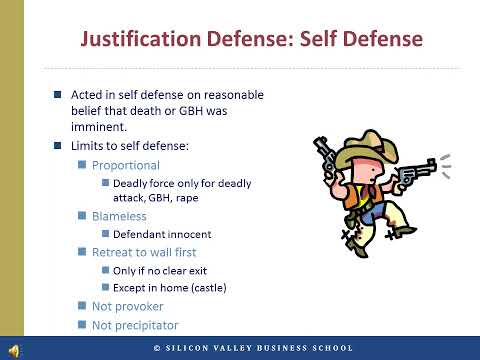
Self-defense is a pretty big deal in U.S. law. It’s like that safety net you can fall back on if things go sideways. Essentially, it allows you to use force to protect yourself when you believe you’re in danger. But, it gets a bit tricky when we dig into the details.
When someone talks about self-defense, they’re usually thinking about that moment of panic when they need to defend themselves from an attack. But here’s the catch: not every action you take qualifies as self-defense. First off, **the response has to be proportionate**. You can’t go overboard and, like, use a sledgehammer if someone is just trying to shove you around.
So, let’s break this down further. You might wonder what kind of situations can be justified under this defense:
- Imminent Threat: The threat against you has to be immediate. If someone’s yelling at you from down the street, that’s probably not enough to justify throwing a punch.
- Reasonable Belief: You have to genuinely believe that you’re about to get hurt. It can’t just be paranoia; it has to be based on the situation at hand.
- No Safe Retreat: In some states, if there’s an option for you to safely escape the situation without using force, then legally you’re expected to take that route first.
Let’s say you’re out for a jog and someone suddenly confronts you aggressively. If you react by pushing them away because you feel threatened and there’s no way out, that’s more likely seen as self-defense than if you chased them down afterward.
Now, here comes another layer—the legal aftermath of using self-defense can vary widely depending on where you are in the U.S., thanks largely to differing state laws on “stand your ground” or “duty to retreat.”
For instance, in Florida—thanks to its “stand your ground” law—you don’t have a legal duty to back down if confronted in a public space. It’s different in New York where there is more emphasis on retreat before using lethal force.
Anecdote Alert! A few years ago, there was this case where a store owner shot an armed robber during an attempted heist. The store owner claimed he acted out of fear for his life—an immediate threat! Initially charged with murder, once people started digging into details and evidence surfaced that showed he had genuinely feared for his safety during the robbery attempt—the charges were dropped! This is real-life stuff showing how complex these cases can get based on circumstances.
However—and it’s important—you should realize that claiming self-defense doesn’t mean you’ll automatically get off scot-free. Courts will look at everything—how reasonable was your fear? Did your response fit the threat? That’s why having strong evidence or witnesses can make or break these cases.
In summary, understanding self-defense means recognizing both your rights and responsibilities under the law when facing danger. And even when it feels right at the moment—you better believe those actions will come under scrutiny later! So next time you’re wondering about going full-on hero mode during a sketchy situation… well think again!
Understanding the Six Types of Justifying Circumstances in Law: A Comprehensive Guide
Understanding the six types of justifying circumstances in law can feel a bit overwhelming at first. But don’t worry! I’ll break it down for you in a way that makes sense.
Justifying circumstances are basically legal reasons that can make an act that usually seems wrong, like, you know, committing a crime, actually okay under the law. You may have heard about these defenses in movies or news stories. So let’s unpack them!
1. Self-defense
This one’s pretty common. If someone attacks you, and you use reasonable force to protect yourself, this can justify your actions. For instance, let’s imagine you’re walking down the street and someone tries to mug you. If you fight back because your life feels threatened, that’s self-defense.
2. Defense of Others
Similar to self-defense but aimed at protecting someone else. If you witness someone being attacked and step in to help them using reasonable force, you might be justified too! Like if you see a friend being bullied and shove the bully away—totally understandable!
3. Defense of Property
Here’s where things get tricky. You can use force to protect your property, but only to a certain extent! For example, if someone tries to steal your bike, it might be acceptable to yell at them or even call the cops—but using serious physical force? That could cross the line.
4. Consent
Sometimes people agree to something that allows for certain actions without legal repercussions—this is consent. Think about sports; players consent to rough play by joining a game. But if someone goes beyond what’s normal in that sport and harms another player? That’s no longer okay.
5. Necessity
This one is all about acting out of urgency or necessity. Imagine you’re stuck in a blizzard and break into an empty cabin for shelter—this might be justifiable if it means saving your life! However, it’s got to be reasonable; can’t just steal food when there are other options.
6. Duress
If you’re forced to commit a crime because someone threatens harm against you or someone else, that’s duress! Picture this: someone puts a gun to your head and demands that you rob a bank for them—you’re acting under duress as you’d reasonably fear for your life.
These justifications aim to acknowledge that sometimes life puts us in tough spots where our choices aren’t so clear-cut—you know? Each situation is unique and hinges on specifics like reasonableness and proportionality of response.
In practice, judges and juries look at these defenses closely during trials because they balance society’s need for order against individual rights and survival instincts.
So next time you’re watching a legal drama or reading the news about an unusual case, think about how these justifying circumstances come into play!
So, let’s chat about something pretty interesting in the realm of U.S. law: the justification defense. It’s that situation where someone claims their actions were justified because they were trying to prevent a greater harm. This could come up in various contexts, like self-defense or defense of others. It’s wild how the law can recognize that sometimes, people act in what they believe is the right way, even if it means breaking a law.
Take, for example, that classic case of self-defense. You might remember a story from a while back about a woman who was at home and found an intruder breaking in. In the heat of the moment, she grabbed a frying pan and ended up hurting him pretty badly. She argued that she was just protecting herself and her kids. The key thing here is whether her response was reasonable given the threat she faced—could she have done something less extreme? It raises some serious questions about human instincts when faced with danger.
And then there are those instances involving people trying to protect others. Imagine seeing someone getting mugged on the street—wouldn’t you want to intervene? There’s this one case where bystanders intervened to stop an assault on a fellow subway rider. They used physical force against the attacker, claiming it was necessary to protect an innocent person. The courts had to look at whether their reaction was proportional to what was happening right there.
But not every justification holds up in court, right? Sometimes emotions take over and lead people to act out of anger or fear without considering the consequences fully. I mean, you could think you’re doing something good but end up making everything worse!
In these real-life examples, we get a glimpse into how complicated human behavior can be when intertwined with legal standards. What makes your actions justified can be so subjective; it really depends on how each situation plays out and how jurors perceive them later on.
The bottom line here is that while laws exist to maintain order (and let’s face it, they’re crucial), life isn’t always fair or black-and-white. People often find themselves wrestling with moral dilemmas where justification isn’t just about legality; it’s also about ethics and instinctual responses in unexpected moments—kind of mind-boggling when you really think about it!




