
The information provided in this article is intended solely for general informational and educational purposes related to U.S. laws and legal topics. It does not constitute legal advice, legal opinions, or professional legal services, and should not be considered a substitute for consultation with a qualified attorney or other licensed legal professional.
While efforts have been made to ensure the information is accurate and up to date, no guarantees are given—either express or implied—regarding its accuracy, completeness, timeliness, or suitability for any specific legal situation. Laws, regulations, and legal interpretations may change over time. Use of this information is at your own discretion.
It is strongly recommended to consult official sources such as the U.S. Government (USA.gov), United States Courts, or relevant state government and court websites before acting on any information contained on this website or article. Under no circumstances should professional legal advice be ignored or delayed due to content read here.
This content is of a general and informational nature only. It is not intended to replace individualized legal guidance or to establish an attorney-client relationship. The publication of this information does not imply any legal responsibility, guarantee, or obligation on the part of the author or this site.
You ever heard of “reasonable articulable suspicion”? Sounds fancy, right? But don’t worry—it’s way simpler than it sounds.
Imagine you’re just chilling at the park. Then, suddenly, a cop rolls up to you, asking questions. What made them think you were up to something? That’s where this whole “suspicion” thing comes in.
It’s like a little dance between your rights and what police need to act. So yeah, it can get tricky!
Let’s break it down together and see how this all fits into the bigger picture—especially when it comes to jury trials. Trust me, it’s fascinating stuff!
Understanding Reasonable Articulable Suspicion: Legal Standards and Implications
Understanding Reasonable Articulable Suspicion can be super important, especially if you’re thinking about how law enforcement operates. So, what’s the deal with it? It’s a legal standard used by police to justify stopping and sometimes even searching a person. But hold on, there’s a bit more to it than just that.
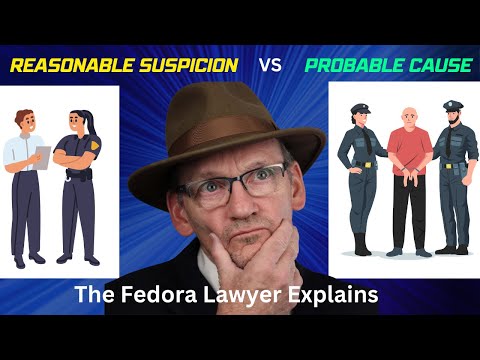
First off, let’s break down the term. Reasonable articulable suspicion isn’t just a fancy phrase; it means that officers need to have specific facts or circumstances that lead them to believe someone might be involved in criminal activity. This is different from “probable cause,” which is needed to make an arrest or obtain a warrant.
You may be wondering why this matters. Well, without reasonable suspicion, any stop could be seen as unlawful. Imagine you’re walking down the street and suddenly stopped by an officer who can’t explain why—they just had a “hunch.” That would feel pretty unfair, wouldn’t it? It’s all about balancing law enforcement needs with your rights.
Let’s lay out some key points about this concept:
Now, think about when reasonable suspicion comes into play during jury trials. Jurors often look at whether the officer acted appropriately during a stop or search based on what they observed. A common example is when police see someone repeatedly checking their watch while glancing nervously at cars parked nearby—that might raise eyebrows and seem like enough justification for a stop.
But here’s where it gets even trickier: what happens if the officer stops someone without proper cause? Well, the evidence collected after that point might not be usable in court. It all boils down to ensuring everyone plays fair within legal boundaries.
In short, understanding reasonable articulable suspicion helps everyone know their rights and responsibilities better. If law enforcement has valid reasons—backed up by observable facts—then they can do their job effectively while respecting your rights too! You get how important this balance is now, right?
Understanding Reasonable Suspicion: Insights from the US Supreme Court
Alright, let’s get into what “reasonable suspicion” really means and why it matters, especially when it comes to the law and your rights. This concept is crucial in the realm of law enforcement.
The basic idea behind reasonable suspicion is that police need more than just a hunch to stop someone. They must have specific, articulable facts that point to the likelihood of criminal activity. Think of it as having a gut feeling, but backed up by real observations or evidence.
The US Supreme Court has played a huge role in shaping this idea. A landmark case was *Terry v. Ohio* in 1968. This case established that officers could stop and frisk a person if they had reasonable suspicion that the person was involved in criminal behavior. The Court decided that protecting officer safety during these encounters was just as important as protecting individual rights.
So, what exactly does “reasonable suspicion” look like? It’s not just vague feelings; it’s about context and specifics. For instance:
- If a cop sees someone lurking around parked cars late at night, acting nervous or fidgety, they might have reasonable suspicion.
- If someone matches the description of a suspect in a recent robbery found roaming close to the scene, that’s also reasonable.
- But if an officer stops you just because you’re walking in an area known for gang activity without any other evidence? That might not fly.
It’s all about balancing safety with fairness. Now imagine you’re out with friends one night. A cop pulls over your group because you’re laughing too loudly near closed businesses. If there are no signs of trouble, this stop could cross into unreasonable territory.
Another key case is *Illinois v. Wardlow*. In this one, the Supreme Court ruled that unprovoked flight from police can give rise to reasonable suspicion. If you see cops and take off running without any other reason—whoa! That might trigger an officer’s instincts.
Also interesting is how reasonable suspicion plays out during jury trials. Evidence obtained from stops based on unreasonable suspicion can be challenged in court under what’s known as the exclusionary rule—a way to keep illegally obtained evidence out of trials.
To wrap it up, remember that **reasonable suspicion** isn’t about being certain someone committed a crime—it’s more about having enough facts to justify that initial inquiry or stop by law enforcement.
So next time you hear about someone being stopped by police under suspicious circumstances, think about whether there were real clues leading up to it or if they were just judged at face value!
Understanding the 4 Levels of Suspicion in Legal Contexts: A Comprehensive Guide
So, let’s chat about the **four levels of suspicion** you might encounter in U.S. law. These levels are like a ladder; each step up means more serious implications for individuals involved in legal situations. Understanding these can be super helpful, especially when it comes to things like police stops or courtroom proceedings.
1. Mere Privacy
This is the lowest level of suspicion, and honestly, it’s more about just having a feeling than anything concrete. Think of it as your gut instinct telling you something seems off but without any actual evidence. It doesn’t mean law enforcement can act on it, though. For example, if you see someone walking down the street acting strangely, you might have a hunch they’re up to no good—but that’s not enough for police action.
2. Reasonable Suspicion
This is where things start to get more serious. Reasonable suspicion means that there are specific facts or circumstances that make law enforcement think something unlawful could be happening. It’s a bit vague but allows officers to stop and question someone, and maybe even pat them down if they’re worried about weapons.
Let’s say you’re hanging out at a park late at night, and you see someone pacing back and forth while looking over their shoulder repeatedly—you know? If a police officer sees this behavior, they might approach the person because they have reasonable suspicion something fishy is going on.
3. Probable Cause
When we hit probable cause, we’re stepping up another rung on our ladder! This one requires more concrete evidence—enough for a reasonable person to believe that a crime has been committed or will be committed soon.
For instance, if cops spot you driving erratically and then see you toss something out of your window (like drugs), they now have probable cause to pull you over and search your car since there’s clear evidence suggesting illegal activity.
4. Beyond a Reasonable Doubt
Now we’ve reached the highest level—this one is used in criminal cases during trials. It means that there’s no logical reason for jurors to doubt the prosecution’s case against the defendant; basically, they must be near-certain of guilt before rendering a verdict.
Imagine being on a jury where all evidence shows someone was caught red-handed robbing a bank with multiple witnesses—here it’s pretty hard to argue otherwise! The prosecution needs that kind of strong backing before getting anyone convicted; it’s all about making sure justice is truly served.
So there you have it! Each level progresses from just *vibes* by an officer all the way up to solid proof required in court cases—the higher you go, the more serious consequences can become for everyone involved!
So, let’s talk about this idea of “reasonable articulable suspicion.” It sounds super legal jargon-y, right? But it’s actually a pretty important concept, especially when it comes to police stops and the whole justice system. Basically, it’s what a cop needs to have in order to stop someone. They can’t just pull you over because they feel like it or think you look suspicious in a vague sort of way. No, they need to have specific reasons that make sense.
Imagine you’re driving home one night. The road’s empty; it’s dark and quiet. Suddenly, flashing lights are in your rearview mirror. You pull over feeling that tightening in your stomach—what did you do wrong? A cop comes up and says they noticed you were swerving a bit or maybe your taillight is out. That makes sense, right? They had a reason to stop you.
Now, here’s where it gets interesting in the context of jury trials. When these cases get brought into court, jurors often grapple with whether the officers had enough justification for their actions. Picture this: a juror leaning back in their chair during deliberation with questions swirling in their mind—was there really a good reason for that stop? Did the officer really see something concrete? What happens if that suspicion was just based on stereotypes or assumptions?
The burden falls on the prosecution to prove that an officer’s suspicions were reasonable at the time of the stop or search. If they can’t do this convincingly, the evidence obtained during that interaction might be thrown out—like if you found out later that evidence was obtained illegally partway through your own case! This all ties back into our rights as citizens and how much trust we put into law enforcement.
Let me tell you a quick story I heard from a friend recently about this whole thing. They were coming home from work one evening after a long shift when they got pulled over at an intersection for what seemed like no reason at all. The officer claimed there was “suspicious behavior,” but my friend hadn’t done anything wrong—they were just tired! It turned out later that this officer had many stops like these under their belt as part of an aggressive policy focusing on certain neighborhoods rather than actual crime rates.
Nuts, right? It leaves some serious questions about where we draw the line with reasonable suspicion and how it affects people’s lives—even impacting jury decisions down the line when similar cases come up.
Overall, understanding reasonable articulable suspicion can help us navigate these tricky waters more clearly our legal rights are vital because every situation isn’t black and white; sometimes things get murky real quick! And knowing how these concepts play out can make all the difference not just for individuals involved but also for society as a whole.




