
The information provided in this article is intended solely for general informational and educational purposes related to U.S. laws and legal topics. It does not constitute legal advice, legal opinions, or professional legal services, and should not be considered a substitute for consultation with a qualified attorney or other licensed legal professional.
While efforts have been made to ensure the information is accurate and up to date, no guarantees are given—either express or implied—regarding its accuracy, completeness, timeliness, or suitability for any specific legal situation. Laws, regulations, and legal interpretations may change over time. Use of this information is at your own discretion.
It is strongly recommended to consult official sources such as the U.S. Government (USA.gov), United States Courts, or relevant state government and court websites before acting on any information contained on this website or article. Under no circumstances should professional legal advice be ignored or delayed due to content read here.
This content is of a general and informational nature only. It is not intended to replace individualized legal guidance or to establish an attorney-client relationship. The publication of this information does not imply any legal responsibility, guarantee, or obligation on the part of the author or this site.
You know that feeling when you’ve got a big decision to make, and it weighs on you? Well, that’s kind of what juries go through when they deal with several liability in court cases. It’s like piecing together a puzzle but with real-life stakes.
Imagine sitting in that jury box, listening to stories, arguments, and emotions flying all around. You’re not just a passive listener; you’re part of something important. Every decision you make could impact lives and futures.
But here’s the kicker: several liability complicates things. It’s about sharing the blame among different people or parties. And honestly, it can get pretty confusing! How do you weigh who’s responsible for what?
So let’s unpack this a bit. We’ll dive into how jurors see things, what influences their decisions on liability, and why it all matters in the grand scheme of justice. Seriously, it’s way more interesting than it sounds!
Understanding Several Liability Clauses: Implications and Legal Considerations
Understanding several liability clauses can feel like venturing into a legal maze. But once you break it down, it’s all about sharing responsibility among multiple parties. So, let’s unravel this together!
When we talk about several liability, we’re dealing with a situation where each party involved in a legal matter is only responsible for their own share of the fault. Imagine a car accident involving three drivers. If Driver A is deemed 60% at fault, Driver B 30%, and Driver C 10%, each driver pays the damages based on their percentage of fault. That’s several liability in action.
Now, this can shift dramatically based on whether you live in a comparative negligence or contributory negligence state. In most states, comparative negligence allows recovery even if you’re partially at fault. But some places—like a few states with contributory rules—can leave you high and dry if you’re found even 1% responsible.
So, here’s the deal: juries often play a pivotal role. They’re tasked with figuring out who’s at fault and to what degree each party shares that burden. This determination can impact how much damages get awarded and who pays what portion.
There are some key points to consider when diving deeper into these clauses:
- Plaintiff’s Burden: The person suing must demonstrate how much each defendant contributed to the harm.
- Jury Instructions: Juries get specific instructions on how to assign percentages of fault. These guidelines vary by jurisdiction.
- Settlement Implications: If one party settles early, juries may need to reassess how they allocate responsibility among remaining defendants.
- Sovereign Immunity: Sometimes government entities have protections against being sued fully; this can complicate several liability cases.
- Capped Damages: Some states limit total damages in certain cases (like medical malpractice), affecting overall payouts.
A real-world example could be helpful here. Imagine you and your friends decide to throw a neighborhood block party but someone trips over an extension cord during the festivities. If that person decides to sue everyone involved in planning—yes, even you—you might find that due to several liability rules, your financial responsibility is limited only to your part in organizing.
But keep in mind that understanding these clauses isn’t just academic; it really matters when you end up facing the jury as they make those critical calls about fairness and accountability.
Legal concepts like these can feel heavy sometimes, but knowing how several liability works helps you grasp what might happen should things ever go south. And hey—a little knowledge goes a long way when navigating life’s many twists and turns!
Understanding Several Liability vs. Joint Liability: Key Legal Differences and Implications
Understanding the differences between several liability and joint liability can be pretty crucial, especially when it comes to how juries see these concepts in court. So, let’s break it down in a chill way.
When you think about **joint liability**, picture a group of friends deciding to rent an apartment together. If they sign the lease, they’re all equally responsible for the rent. If one friend skips out on the payment, guess what? The others have to cover that share too. In legal terms, if multiple parties are found jointly liable for harm or damages, they can be held responsible for the full amount, not just their share.
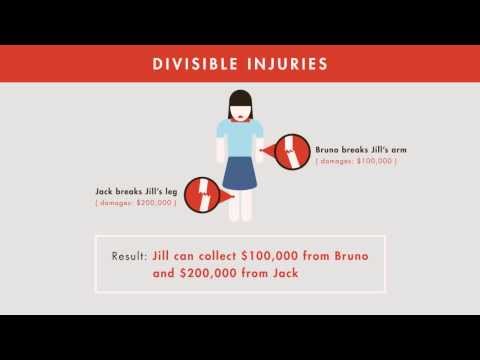
On the flip side, let’s chat about **several liability**. This one’s a little different. Imagine again our group of friends but this time they’re each individually responsible for their own actions. If one friend accidentally breaks something and causes damage worth $1,000, only that friend is on the hook for that amount—not everyone else in the group. In several liability situations, you only pay for your portion of the damages.
Now let’s get into how juries see these two differences:
- Risk Distribution: Juries may think several liability is fairer since each defendant is only responsible for their own actions.
- Encouragement of Responsibility: With joint liability, there might be less incentive to act responsibly since everyone shares the burden.
- Plausibility of Claims: Jurors might look more kindly on claims where several liability applies because it limits blame spreading across many parties.
Think about a car accident where multiple drivers were involved. If it turns out to be joint liability and all are found at fault, all drivers could end up paying more than what might seem fair to them as individuals—especially if one was merely 5% at fault!
Here’s where things get emotional: imagine being part of a lawsuit after a serious accident. You know deep down you played a small role in what happened—maybe just a moment of distraction while driving—but then learn you’re stuck with paying way more than your share because someone else didn’t cover theirs properly! That feeling of being lumped together can really sting.
Juries often grapple with these ideas during trials. They have to decide not just who’s at fault but also how much each party should really pay based on their level of responsibility.
The main takeaway? Understanding several versus joint liability shapes perspectives not just legally but personally too. It affects who feels responsible when things go wrong and how consequences play out in real life—which is pretty important stuff if you find yourself in court someday!
Understanding Modified Joint and Several Liability: Key Concepts and Implications
Modified joint and several liability is one of those legal concepts that can sound a bit convoluted at first, but once you break it down, it’s not too tough to grasp. So, let’s jump right into it!
In the legal world, **joint and several liability** often comes up in cases involving multiple defendants. This means that if two or more parties are found liable for damages, they can be held responsible for the entire amount. So, if one defendant can’t pay their share, the other(s) might have to cover it all. Makes sense?
Now, modified joint and several liability changes things a bit. It’s like a middle ground between full joint and several liability and something called **several liability**. Under this modified approach:
- Defendants’ Fault: The total payout is determined by how much each defendant contributed to the harm or damage.
- Thresholds: Usually, there’s a threshold of fault that must be reached for one defendant to be held responsible for another’s share.
- Proportionate Shares: If one party is found to be less than a certain percentage at fault (often around 50%), they may only have to pay their share of the damages.
Let me put this in real-world terms. Imagine you’re in a car accident with two other drivers. If you’re all deemed equally at fault—let’s say 33% each—you’d split the damages evenly. But what if one driver was only 20% at fault? In many states with modified joint and several liability, they won’t have to cover more than their fair share.
This leads us into how juries view these cases. Jurors might grapple with understanding percentages of fault because people naturally want things black and white: “If someone did something wrong, they should pay!” But the reality is often messier.
It can be tricky when jurors try to assign blame among multiple parties—think of trying to divide a pizza when everyone insists they took only one slice but you see half of it still left on their plates! Juries must figure out who’s truly responsible while also being mindful of how different state laws apply.
There are real implications here too! This system affects **settlements**, as defendants may choose to settle rather than risk being on the hook for more than they think is fair—especially if they’re sitting beside someone else who might end up paying less due to that threshold I mentioned earlier.
So basically, modified joint and several liability adds layers to how responsibility is assigned in personal injury cases or torts (which is just lawyer-speak for bad stuff that happens). Understanding these nuances can help you appreciate more about how our legal system tries (sometimes successfully) to balance fairness with accountability.
In short: while this concept might feel complex at first glance, seeing it through simple examples can offer clarity on how justice—or what we hope will look like justice—works when there are multiple wrongdoers involved!
You know, when we think about juries, we often picture a dozen or so folks sitting in a box, listening to arguments and evidence. But there’s so much more going on beneath the surface, especially when it comes to something like several liability. It’s a pretty complicated topic that can really change the landscape of justice depending on how a jury sees it.
Let’s break it down a bit. In the U.S., several liability means that each party in a lawsuit is only responsible for their share of the damages. So if you slip and fall because of some slippery floor at a store and you’ve got multiple parties accountable—like the store owner and the cleaning company—each one pays just their part. This way, you’re not stuck bearing the entire financial burden if things go sideways.
But what happens when jurors start considering how to evaluate blame? That’s where things can get tricky. Imagine you’re part of this jury, right? You’re listening to different perspectives, and some parties might try to downplay their own responsibility while pointing fingers at others. It can feel like a game sometimes! I remember reading about a case where one party admitted they didn’t do their job well but was quick to say that another had an equal hand in the mess—talk about passing the buck!
Now, here’s where it gets emotional. Jurors don’t just hear facts; they also connect with stories. If someone stands up there and shares how this incident has affected their life—maybe they can’t play with their kids anymore or have mounting medical bills—it hits hard! Those personal narratives can sway them to see certain parties as more responsible than others based on empathy rather than strictly legal definitions.
And let’s face it, jurors come from all walks of life with different backgrounds and experiences shaping their views on what fairness looks like. Some might feel inclined toward holding everyone accountable equally because that’s what feels just in their eyes. Others may lean towards more leniency depending on mitigating circumstances presented during proceedings.
So okay, as a juror dealing with several liability claims isn’t just about numbers anymore; you’re balancing emotions, sympathy, ethics—all while trying to piece together who truly deserves blame in complex situations.
Essentially, how juries interpret several liability reflects society’s broader views on accountability and justice—a delicate dance between law and humanity that makes every case unique.. Just imagine being in those shoes! It’s hard work figuring out what feels right when everything is on the line for real people out there who are counting on them.




