
The information provided in this article is intended solely for general informational and educational purposes related to U.S. laws and legal topics. It does not constitute legal advice, legal opinions, or professional legal services, and should not be considered a substitute for consultation with a qualified attorney or other licensed legal professional.
While efforts have been made to ensure the information is accurate and up to date, no guarantees are given—either express or implied—regarding its accuracy, completeness, timeliness, or suitability for any specific legal situation. Laws, regulations, and legal interpretations may change over time. Use of this information is at your own discretion.
It is strongly recommended to consult official sources such as the U.S. Government (USA.gov), United States Courts, or relevant state government and court websites before acting on any information contained on this website or article. Under no circumstances should professional legal advice be ignored or delayed due to content read here.
This content is of a general and informational nature only. It is not intended to replace individualized legal guidance or to establish an attorney-client relationship. The publication of this information does not imply any legal responsibility, guarantee, or obligation on the part of the author or this site.
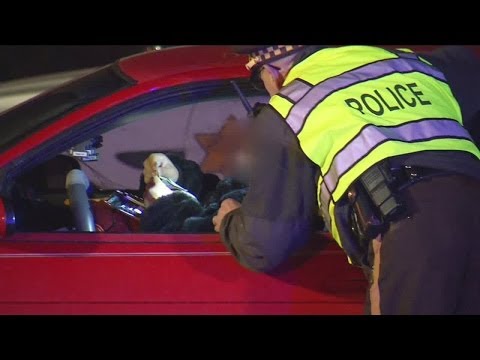
You know those nights when you’re out with friends, just enjoying life? Suddenly, you hit a sobriety checkpoint. It’s that moment when your heart skips a beat for a second.
So, what’s really going on behind those flashing lights? Ever wondered how jurors view these checkpoints?
Honestly, there’s more to it than meets the eye. Jurors come from all walks of life and have different takes on these situations. Some think they’re necessary for safety; others see them as overreach.
Let’s dive into this topic and see what people really think about sobriety checkpoints in America. You might find it pretty eye-opening!
Landmark US Supreme Court Case: Legalization of Highway Sobriety Checkpoints for Community Welfare
When it comes to sobriety checkpoints, there’s a lot to unpack, especially from a legal perspective. These checkpoints have stirred up quite the debate in America regarding how our rights stack up against community safety. So, let’s talk about one landmark Supreme Court case that really shaped the landscape: **Michigan Department of State Police v. Sitz** (1990).
This case started when Michigan set up sobriety checkpoints to catch drunk drivers and promote public safety. A few folks rolled up to a checkpoint and were not too happy about it—claiming it violated their Fourth Amendment rights against unreasonable searches and seizures. They thought, “Hey, I should get more privacy!” But the Supreme Court had other ideas.
In a tightly contested decision, the Court ruled that **sobriety checkpoints are constitutional** under the law. The justices weighed out the need for public safety against individual rights. They decided that preventing drunk driving was a significant enough reason to allow these checkpoints. The majority opinion pointed out how alcohol-related accidents pose a real risk to everyone.
So, what does this mean for jurors when they’re faced with cases involving sobriety checkpoints? Well, here’s some essential stuff to consider:
- Public Safety vs. Individual Rights: Jurors might find themselves balancing these two concepts. On one hand, you have police trying to keep roads safe; on the other, people wanting their personal freedoms protected.
- Legal Precedents Matter: The Sitz decision set a precedent that can guide juror decisions. It shows how courts often prioritize community welfare in certain situations.
- Checkpoint Operations: Different states have different rules on how these checkpoints operate; some must provide advance notice or be conducted at specific times.
- Impact on Community: Checkpoints can deter drunk driving effectively; jurors can factor in whether they believe this contributes positively to their communities.
It’s kind of a tightrope walk for jurors—who may feel conflicted but also want their neighborhoods safe from reckless drivers.
An interesting point is how local perspectives play into this role too! In some areas, people might think these checkpoints are necessary evils for keeping drunk drivers off the road—like back during the holidays when parties abound and so many are out celebrating.
But then again, imagine being stuck in traffic at one of those things! Frustrating right? Still, knowing that law enforcement aims to prevent harm could sway opinions back towards support for these measures.
So there you have it! Sobriety checkpoints mix our rights with our responsibility toward community welfare—and it’s all rooted in landmark cases like **Sitz** which set society’s expectations around what’s acceptable in terms of police action versus privacy concerns.
Understanding Juror Questions in U.S. Courtrooms: Rights, Rules, and Procedures
Understanding how juror questions work in U.S. courtrooms is pretty interesting. Let’s break it down. When you’re a juror, you might think you have some pretty important stuff to say, and, well, you do! But there are rules and rights that come into play.
Your Rights as a Juror
When you get called for jury duty, it’s not just about sitting there and listening. You have the right to ask questions. That’s right! If something isn’t clear during the trial, or if you want more info on a point being discussed, you can raise your hand—just like in school!
How Questions Work
But here’s where it gets tricky. You can’t just blurt out a question whenever you want. Usually, jurors write their questions down for the judge to review first. The judge then decides if your question is appropriate and if it can be asked to the witness or not.
Rules of Engagement
The rules can vary depending on the court and jurisdiction you’re in. Sometimes judges let jurors submit questions after certain testimonies; other times it’s at the end of an entire case presentation. So basically, it’s all about keeping things orderly.
Focusing on Sobriety Checkpoints
Now, let’s link this to sobriety checkpoints because that topic comes up pretty frequently in court cases related to DUI charges. Imagine there’s a trial regarding whether sobriety checkpoints are constitutional or not. As a juror, if you have questions about why these checkpoints are set up or how they’re enforced, it could be vital stuff for understanding the case at hand.
Let’s say a witness explains how often cars are stopped at these checkpoints; maybe you’re unclear on what determines probable cause for stopping someone? If so, jotting down your question could lead to clarity not just for yourself but also for your fellow jurors!
The Impact of Juror Questions
When jurors ask thoughtful questions, it can really help illuminate the evidence presented in court. It leads to better-informed decisions at the end of the day—a fair verdict hinges on understanding everything fully!
But remember: while asking questions is important, staying neutral is even more crucial until all evidence has been heard—don’t jump ahead! Just take it one step at a time.
So next time there’s talk about jury duty or courtroom dynamics—and yeah, that means sobriety checkpoints too—just remember how crucial those little moments of questioning can be in making sure justice is served right!
Exploring the Constitutional DUI Exception: Legal Insights and Implications
So, you’ve probably heard about sobriety checkpoints, right? Those places where police set up to check if drivers are under the influence of alcohol or drugs. They raise a lot of questions about legality and Constitutionality. One major topic buzzing around is the “Constitutional DUI Exception.” Let’s break it down!
DUI Checkpoints and the Fourth Amendment
The Fourth Amendment protects us from unreasonable searches and seizures. At first glance, setting up checkpoints might seem like a violation. But here’s the twist: courts have determined that they can be constitutional if they follow certain guidelines.
Legal Framework for Checkpoints
Here are some key points:
Seems like a balancing act, doesn’t it? On one hand, public safety is crucial; on the other hand, we want our rights protected.
Juror Perspectives and Real-Life Implications
Now, if you’re a juror sitting in on cases involving DUI checkpoints, your perspective matters big time! You might have mixed feelings about their effectiveness versus their legality.
For instance, you might wonder whether they actually reduce drunk driving incidents or if they’re just an inconvenience for sober drivers caught in long lines. This ambiguity can affect how jurors view evidence presented in court.
Imagine being pulled over at 2 AM after an exhausting day at work, only to find you’ve been stopped because someone is checking for DUIs. You feel fine; maybe a bit annoyed! But what if you’re in a hurry? It sparks some emotional reactions—those feelings can shape how a juror decides on related cases.
The Impact on Communities
In many communities, sobriety checkpoints are seen as essential tools for preventing accidents. However, critics argue that they disproportionately affect certain populations and raise concerns about racial profiling and civil liberties violations.
Jurors might grapple with these issues when evaluating cases tied to checkpoint-related arrests. The implications can stretch beyond individual cases to broader community trust in law enforcement.
Conclusion: A Balancing Act
So where does this all leave us? The constitutional DUI exception provides law enforcement with tools to keep roads safer while attempting to respect individual rights. But it’s like walking a tightrope—finding that sweet spot between safety and civil liberties is no small feat!
Injury or fatality outcomes from drunk driving incidents make these discussions incredibly vital. Jurors play an essential role in shaping how these laws are perceived and enforced within their communities.
By understanding both sides of the coin—public safety concerns and personal freedoms—you can contribute meaningfully when serving as a juror on related cases!
Imagine sitting in a jury box, watching a case unfold about sobriety checkpoints. It’s kind of surreal, right? The whole concept of these checkpoints really gets people talking. Some believe they’re necessary for keeping our roads safe, while others view them as an invasion of privacy. Like, if you’ve ever been driving late at night and you see those flashing lights ahead, your heart probably skips a beat. You know what I mean?
Now, consider how it feels as a juror when you hear arguments from both sides. On one hand, there are stories of people whose lives were saved because officers caught impaired drivers. It’s powerful stuff—those moments where someone goes from potentially causing chaos to being stopped in their tracks can be life-changing. On the flip side, though, there’s that feeling of unease when the discussion shifts to the rights involved. Are we sacrificing too much freedom for safety?
There was this moment during one trial I remember—this one juror shared how they’d once been stopped at a checkpoint after a long shift in which they hadn’t had a single drink but still felt cornered by the whole scenario. That real-life experience lit up eyes around the room; it was evident many could relate to that anxiety and tension.
And then there’s the question: Are these checkpoints effective? Some studies say yes—they really help lower drunk driving incidents—but others bring up concerns about racial profiling and whether they even catch enough offenders to make them worth it.
You end up reflecting on what justice means in these situations. Is it protecting public safety? Or is it maintaining individual rights? As a juror, you want to balance both sides without losing sight of either.
So yeah, when you think about sobriety checkpoints from that juror perspective, it turns into more than just legal jargon or statistics—it becomes deeply personal. It’s about people and their stories affecting lives on both ends of the spectrum—all while you’re just trying to do your civic duty and make sense of what feels like such a tricky balance between safety and freedom.




