
The information provided in this article is intended solely for general informational and educational purposes related to U.S. laws and legal topics. It does not constitute legal advice, legal opinions, or professional legal services, and should not be considered a substitute for consultation with a qualified attorney or other licensed legal professional.
While efforts have been made to ensure the information is accurate and up to date, no guarantees are given—either express or implied—regarding its accuracy, completeness, timeliness, or suitability for any specific legal situation. Laws, regulations, and legal interpretations may change over time. Use of this information is at your own discretion.
It is strongly recommended to consult official sources such as the U.S. Government (USA.gov), United States Courts, or relevant state government and court websites before acting on any information contained on this website or article. Under no circumstances should professional legal advice be ignored or delayed due to content read here.
This content is of a general and informational nature only. It is not intended to replace individualized legal guidance or to establish an attorney-client relationship. The publication of this information does not imply any legal responsibility, guarantee, or obligation on the part of the author or this site.
So, you know how sometimes in movies, the courtroom drama gets super intense? But then, outta nowhere, the judge slams down the gavel and calls for a summary judgment? Kinda confusing, right?
Well, a summary judgment is like that moment when someone says, “Hold up! We don’t need to drag this out.” It’s a way to cut through the clutter in legal cases.
Instead of heading straight for a trial—which can feel like forever—this process helps the court decide if there’s actually enough evidence to keep going. It can save everyone time and headaches.
Imagine being stuck in jury duty for weeks only to find out that the case was a bust from the start. Total bummer! So yeah, understanding this whole summary judgment thing is pretty important if you’re ever called to serve.
Understanding Summary Judgment and Its Impact on the U.S. Jury System in Lancaster, PA
So, you’re curious about summary judgment and how it works within the U.S. jury system, particularly in a place like Lancaster, PA? Great choice! It’s one of those legal concepts that can seem pretty hefty at first glance but is actually pretty straightforward once you break it down.
Basically, summary judgment is a legal move that either side in a case can make when they think there are no real facts in dispute and they should win as a matter of law. In other words, if there’s not enough evidence for a reasonable jury to rule in favor of the other party, one side can ask the judge to decide the case without going to trial.
Here’s how it rolls out:
- Filing for Summary Judgment: When someone files for summary judgment, they submit evidence—like documents and affidavits—that supports their claim. This basically says, “Look, there’s nothing here that needs more chatter; I should win right now.”
- Response Time: The other party gets a chance to respond. They can argue that there are indeed some factual disputes requiring a jury’s take.
- The Judge’s Decision: The judge takes all the evidence presented and decides if there’s enough disagreement over facts to send it to a jury or if they can just wrap it up themselves.
This process is super significant because it helps clear out cases that don’t need to waste time and resources in court. Think about it—if you have cases where one side has no credible argument or evidence, dragging things out just isn’t fair or efficient.
In Lancaster specifically, summary judgments can really shape the landscape of local court cases. A few years back, there was this civil suit regarding property disputes where one party claimed title rights without proving them effectively. The judge granted summary judgment because the opposing side couldn’t show there was any genuine issue of material fact—like what ownership really meant in this context.
Now you’re probably asking: what happens to juries with summary judgments hanging around? Well, these judgments mean fewer cases go before juries. That changes the dynamics quite a bit! Juries usually get involved when there’s enough at stake and genuine disagreement on key issues. If summaries kick out weak cases early on, jurors might only see those that truly need their deliberation.
Thus far, many argue that while speedy resolutions are good for saving resources and time, they also take away from everyday citizens participating in justice as jurors. It’s kind of bittersweet; on one hand, you’re keeping courts running smoothly but on the other hand—less participation from folks like you means less community input in making decisions about justice.
At the end of the day—with summary judgment being an effective tool—lawyers get to steer their cases strategically while judges handle their dockets more efficiently. But remember: every motion filed still has implications—it shapes who gets heard and how justice flows through places like Lancaster!
Understanding Summary Judgment and Its Impact on the U.S. Jury System in Pennsylvania
So, let’s talk about summary judgment. It sounds a bit fancy, but it’s really just a legal tool used in court to speed things up. In Pennsylvania, as elsewhere in the U.S., it plays a crucial role in how cases are managed before they even get to a jury.
What is Summary Judgment?
Basically, summary judgment is a request made by one party in a lawsuit asking the court to rule that the other party has no case. It happens when there are no genuine disputes over material facts—meaning the key facts of the case aren’t being argued. The moving party believes that even if you take all the evidence in the light most favorable to the other side, they should win as a matter of law.
Why Does It Matter?
You might be wondering, why not just let everything go to trial? Well, trials can get super expensive and lengthy. Summary judgment helps cut down on unnecessary trials and can save both time and money for everyone involved. If you think about it, if you’ve got a case where there’s no real argument—like if one party clearly didn’t follow through on their contract—it can feel pointless dragging that into court.
The Criteria
In Pennsylvania, for summary judgment to be granted, certain criteria must be met:
- The moving party must show there are no genuine issues of material fact.
- They must also demonstrate they’re entitled to judgment as a matter of law.
If they do this successfully, then boom—the judge can decide without needing a jury.
Impact on Jury System
Now here’s where it gets interesting regarding juries. When summary judgment is used effectively, it means fewer cases make it to trial. This impacts jurors because less people get called for jury duty! It’s kind of like having an event where only some folks get invited—those who do might feel more special about their selection.
Also, think about it this way: juries are often tasked with interpreting complex issues or deciding between conflicting stories. If those stories never reach them because one side wins at summary judgment stage? Well then those important narratives never get told!
A Real-World Example
Suppose someone slips and falls in a store and sues for damages. Let’s say the store says they put out warnings and cleaned up promptly. If evidence backs that up and shows there’s really nothing left to debate—even if it’s tough for the injured person—that could lead the judge to grant summary judgment in favor of the store. So instead of going through all that hassle with witnesses and testimonies (not to mention many people’s schedules getting interrupted), the case gets wrapped up earlier.
In essence, while summary judgments help streamline courtroom procedures—they also reshape how we engage with our justice system as potential jurors or participants in lawsuits.
Understanding this legal maneuver helps you appreciate why not every case lands in front of juries—and how much impact that has overall!
Comprehensive Guide to Crafting an Effective Motion for Summary Judgment: Examples and Best Practices
Crafting a motion for summary judgment can feel pretty overwhelming, but it doesn’t have to be. This legal tool is crucial in getting a case resolved without the hassle of a trial, and understanding how to put one together effectively can save time and resources.
So, like, what’s a motion for summary judgment? Basically, it’s a request asking the court to rule in your favor before going to trial. You argue that there are no genuine disputes over the material facts of the case. If you can prove this, the judge can grant your motion solely based on what’s already been submitted—like documents or affidavits—without needing to hear witness testimony.
The Basics of Summary Judgment
When you file one of these motions, you’re saying it’s clear that nobody needs to bother with all the back-and-forth in court because the evidence is super one-sided. The goal here is clarity. You want to show there’s no way a reasonable jury could find for the other side based on what you’ve presented.
Here are some key points when crafting an effective motion:
- Understand Your Audience: Keep in mind who will be reading this—the judge. They appreciate clear and concise arguments without all the legalese fluff.
- Set Up Your Argument: Start with a solid introduction that lays out why you believe there shouldn’t be a trial. Make your position clear right off the bat.
- Gather Evidence: Include affidavits, documents, and depositions that support your claims. This is where you back up your argument with real proof.
- Cite Relevant Law: Reference statutes and case law that bolster your position. The right legal citations help frame your argument as credible.
- Acknowledge Counterarguments: It shows strength when you address potential flaws or opposing opinions directly within your motion.
- Mistakes to Avoid: Don’t drag things out unnecessarily. Avoid overly complex language or making emotional appeals; stick to facts!
Now, let’s talk about what happens once you submit this motion. The other side gets a chance to respond, like putting their game face on before facing off against yours. They’ll try to show why there *are* genuine disputes about material facts—this is where things get spicy since it could lead you right back into courtroom drama if they’ve got solid points.
Consider this example: Say you’re dealing with a car accident claim where liability is straightforward—one driver ran a red light and hit another car head-on. If you’ve got police reports showing this fact along with witness statements confirming it, then your evidence could make a solid foundation for summary judgment.
Summary judgment is one of those legal concepts that can seem a bit dry at first. But hang on, it actually plays a pretty crucial role in the U.S. jury system! Just to break it down, summary judgment is when a judge decides a case before it even gets to trial, basically saying there’s no real issue of material fact that needs to be decided by a jury. So, if one side has all the evidence lined up and clear as day, while the other side just doesn’t have anything solid to counter with, boom! The judge can step in and make a call.
Let me tell you about this one time I was chatting with my neighbor, who was all stressed out about being called for jury duty. She mentioned that she had heard about cases getting thrown out before they hit the courtroom floor. That’s exactly what summary judgment does! It’s like a gatekeeper to ensure only cases with genuine disputes get through to the jury—saving everyone time and hassle.
Now, I get it; some folks might think this cuts out the jury’s role, but that’s not really how it pans out. It’s more like an efficiency move for the system. If you had every single case go to trial just so a jury could hear it—even when there’s nothing much conflicting—well, that would be chaos! You’d have jurors wasting their time on cases that were pretty much decided already. Not so fair for them or anyone involved.
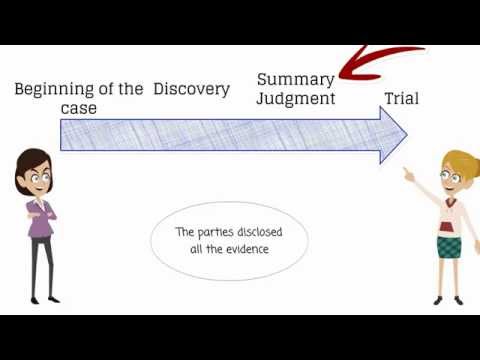
So what happens is that attorneys on both sides will file motions for summary judgment after discovery—the stage where each side digs up evidence and learns what they’re dealing with. If one party believes there aren’t any facts that can reasonably support the other side’s claims or defenses, they’ll ask for this ruling.
But it’s not just black and white; judges have discretion here. They have to look at all the evidence presented in lights most favorable to the non-moving party (which means giving them the benefit of the doubt). If there’s even a smidge of doubt or if things could sway either way based on what’s been uncovered? That case goes right back into jury territory.
In short, summary judgment cuts through unnecessary trials while still respecting everyone’s rights—like balancing efficiency with justice. It gives juries room to tackle only those cases where their input truly matters. And honestly? That keeps our legal system from collapsing under its own weight while giving juries something more meaty and significant to work on when they’re called in. So yeah, summary judgment may not be glamorous or flashy but it’s essential for keeping things running smoothly in our courts!




