
The information provided in this article is intended solely for general informational and educational purposes related to U.S. laws and legal topics. It does not constitute legal advice, legal opinions, or professional legal services, and should not be considered a substitute for consultation with a qualified attorney or other licensed legal professional.
While efforts have been made to ensure the information is accurate and up to date, no guarantees are given—either express or implied—regarding its accuracy, completeness, timeliness, or suitability for any specific legal situation. Laws, regulations, and legal interpretations may change over time. Use of this information is at your own discretion.
It is strongly recommended to consult official sources such as the U.S. Government (USA.gov), United States Courts, or relevant state government and court websites before acting on any information contained on this website or article. Under no circumstances should professional legal advice be ignored or delayed due to content read here.
This content is of a general and informational nature only. It is not intended to replace individualized legal guidance or to establish an attorney-client relationship. The publication of this information does not imply any legal responsibility, guarantee, or obligation on the part of the author or this site.
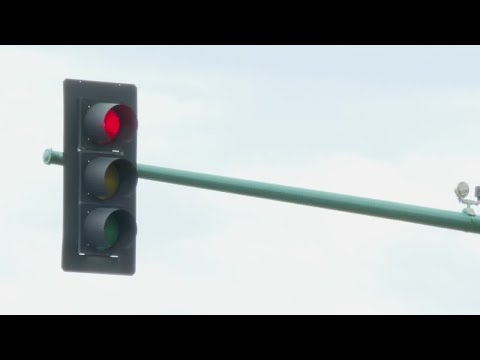
You know those pesky traffic cameras that snap your picture when you run a red light? Yeah, those are a thing now. It’s like they’re the ever-watchful guardians of the road.
But seriously, do they actually help us drive safer, or are they just cash cows for cities? It’s a bit of a hot topic. People have opinions.
Some say they keep us honest and reduce accidents. Others think they’re just sneaky ways to wring out money.
Let’s break it down and see what’s going on with these cameras in the U.S.—you might be surprised at how much impact they’ve had on our law and justice system!
Understanding the 4th Amendment: Are Traffic Cameras an Unconstitutional Surveillance Tool?
The 4th Amendment is all about protecting your privacy against unreasonable searches and seizures. It’s pretty important, right? And it raises a lot of questions when we look at modern technology, like traffic cameras. So, are these cameras unconstitutional surveillance tools? Let’s break it down together.
First off, traffic cameras are used in many cities to catch people running red lights or speeding. On one hand, they’re great for safety—like those moments when you see someone zoom past a stop sign. But on the other hand, there’s that nagging feeling of being watched all the time. You see what I mean?
Now, regarding the 4th Amendment, it mainly protects you from government intrusion without a warrant. Here’s where it gets tricky. Courts have generally held that if you’re driving on public streets, you don’t have a reasonable expectation of privacy. So when those cameras snap a picture of your plate or car as you’re cruising by, they might not be violating your rights, according to some legal interpretations.
However, there’s still debate. Some folks argue that the constant surveillance can lead to an invasion of privacy—even if you’re on public streets. Just because you’re visible doesn’t mean you want to be recorded every time you drive somewhere.
If we look at some legal cases for context:
These rulings show how courts weigh public safety against individual rights.
Another thing to think about is how data from these cameras is stored and used. Are authorities keeping footage forever? Are they sharing it with other agencies? These questions matter because misuse could veer into unconstitutional territory.
Also, consider this: if someone gets wrongly accused based on camera evidence—maybe the camera misread their plate—what happens then? Is there any accountability? This can impact lives in serious ways.
Understanding the Legality of Traffic Cameras in the United States: Key Insights and Regulations
Traffic cameras are all over the place these days, right? They’re meant to catch folks who run red lights or speed, but how legal are they really? Let’s break it down a bit.
First off, the legality of traffic cameras in the United States varies by state. Some states have fully embraced them, while others have banned them altogether. It’s important to check your local laws, as regulations can differ even within states.
Most traffic cameras fall into two categories: red light cameras and speed cameras. Red light cameras take pics of cars that blow through intersections after the light turns red, while speed cameras clock how fast you’re driving. Each state decides if they want to use these systems.
Now let’s talk about some regulations. Many states require that signs be posted to warn drivers that they’re entering a monitored area. This is designed to keep things fair—you should know when you’re being watched.
There’s also the issue of due process here. Some people argue that traffic tickets from these cameras can feel like a slap on the wrist without a chance for a real hearing. You know what I mean? It can feel more like getting caught in a trap than getting justice. In response, some jurisdictions have allowed you to challenge these tickets in court if you think there was an error—like your car wasn’t actually speeding or something.
Here’s something interesting: New York City has been using red light cameras since 1993, and studies show they’ve helped reduce accidents at those intersections! But not everyone is on board with them; critics argue they’re just another way for cities to make money off of fines.
So what’s the deal with privacy? Since these cameras are capturing images of cars and license plates, there are concerns about how long that data is stored and who has access to it. States have different rules here too; some limit how long footage can be kept and for what purposes it can be used.
To wrap it up, traffic cameras play a role in promoting road safety but their legality and effectiveness depend heavily on local laws and regulations. You may appreciate their role in preventing reckless driving or think they’re just unfair traps—either way, knowing how they work where you live is key!
Understanding the Supreme Court’s Ban on Cameras: Legal Implications and Historical Context
The U.S. Supreme Court’s decision to ban cameras in its courtrooms has stirred up quite the conversation. It’s like that one friend who always wants to be on camera but you’re like, “Nah, just keep it private.” This policy affects how we see justice being served and has a long history behind it.
First off, let’s get into the legal implications. When the Supreme Court decided to keep cameras out of its space, they emphasized the importance of maintaining a certain decorum and solemnity in their proceedings. It’s important because the Court wants to preserve the integrity of their rulings. They believe that having cameras could change how attorneys and witnesses behave. Can you imagine someone hamming it up for the camera instead of focusing on delivering justice?
Now, think about traffic signal cameras as a metaphor. These cameras are around mainly to catch folks running red lights or speeding. They serve a **legal purpose** and hold people accountable without needing an officer present at every intersection. Similarly, you might wonder if watching Supreme Court proceedings would help hold justices accountable too, right? But that’s not really how they see it.
Historically, this ban isn’t new. The Supreme Court started off with a hands-off approach to media coverage way back in 1935—no microphones or film crews allowed! The argument was mainly about protecting the judicial process from sensationalism and preserving respect for the law. Essentially, they want real-time deliberations without outside influences.
Think about how emotions run high during trials; things can get messy fast! Like when one side presents their case passionately while the other looks like they’re ready for a nap—imagine that on live TV! This is exactly what those opposed to cameras are concerned about; they fear it might shape public perception unfairly.
But there are voices pushing back against this policy too. Advocates argue that transparency is key—that people should see how decisions are made in real time to maintain trust in our judicial system. There’s something powerful about witnessing justice unfold right before your eyes.
With traffic signal cameras, there’s often debate over fairness too: Are those speeding tickets truly helping road safety? Are courts using evidence from those cameras correctly? Just like with those traffic laws, some believe that seeing justices at work could lead society to question decisions more critically and foster dialogue around legal issues.
In essence, while it’s clear why **the Supreme Court prefers no cameras**, it’ll be interesting to see if this stance evolves over time as society pushes for more openness in government processes.
So yeah, understanding both sides gives us perspective on why this issue matters—not only regarding courtroom behavior but also relating back to things like traffic laws we deal with every day! You follow me?
Traffic signal cameras can spark quite a debate, can’t they? On one hand, you’ve got folks who swear by them as a way to keep our roads safer. You know, fewer accidents, less chaos at intersections. But then there are others who see them as a sneaky way to make money off ticketing drivers. It’s like an ongoing tug-of-war between safety and privacy.
Last summer, I was chatting with my friend Sarah about this whole camera situation. She was driving home from work when she got nailed by one of those cameras for running a red light—she swears the light turned yellow just as she entered the intersection. Well, she ended up with a hefty fine. As we talked it over, I could tell she felt super frustrated, not just about the money but also about what felt like an invasion of sorts. “How is this fair?” she said.
In the U.S., these cameras have become pretty common in many cities. Traffic laws do allow municipalities to use them to catch violators; that’s how the system works legally. They’re seen as tools for enforcing traffic regulations and promoting safer driving habits—at least that’s the idea behind them.
But here’s where it gets tricky: Some people argue that these cameras can sometimes be set up in ways that feel unfair or simply profit-driven rather than genuinely focused on improving safety. There have been cases where critics point out that visibility issues or poorly timed signals put drivers at risk of getting unfairly ticketed.
You might be wondering how courts handle disputes over these tickets. Well, if you get one and think it’s unjustified? You can contest the fine in court and bring up things like whether signage was clear or if the camera malfunctioned (that has happened). Courts generally uphold how these laws are established but can also consider individual circumstances.
The thing is, while it seems straightforward on paper—with laws designed to uphold safety—there’s always this human element intertwined with technology and enforcement practices. We all have stories and experiences that color our opinions about these cameras.
So really, traffic signal cameras might be essential for keeping our streets safer but they also stir up conversations about fairness and personal rights. Like Sarah learned the hard way: it’s more than just a ticket; it touches on deeper issues of justice in our daily lives behind the wheel!




