
The information provided in this article is intended solely for general informational and educational purposes related to U.S. laws and legal topics. It does not constitute legal advice, legal opinions, or professional legal services, and should not be considered a substitute for consultation with a qualified attorney or other licensed legal professional.
While efforts have been made to ensure the information is accurate and up to date, no guarantees are given—either express or implied—regarding its accuracy, completeness, timeliness, or suitability for any specific legal situation. Laws, regulations, and legal interpretations may change over time. Use of this information is at your own discretion.
It is strongly recommended to consult official sources such as the U.S. Government (USA.gov), United States Courts, or relevant state government and court websites before acting on any information contained on this website or article. Under no circumstances should professional legal advice be ignored or delayed due to content read here.
This content is of a general and informational nature only. It is not intended to replace individualized legal guidance or to establish an attorney-client relationship. The publication of this information does not imply any legal responsibility, guarantee, or obligation on the part of the author or this site.
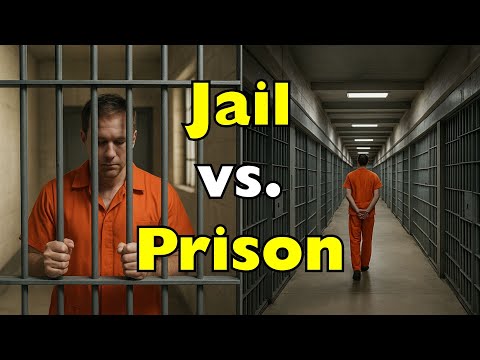
Okay, so here’s the thing. Jail and prison? They’re not the same. Seriously!
A lot of folks mix ‘em up. You know, like when you think all soda is Coke? Totally different vibes.
Jail is usually where you hang out for a short time—think overnight or a few weeks. But prison? That’s where people go for the long haul, like years, sometimes decades.
It’s kinda important to know the difference, especially if you’re ever in a tough spot or just curious about how the whole system works. So let’s break it down!
Understanding the Differences Between Jail and Prison in the USA: Key Insights and Implications
So, let’s break down the difference between jail and prison in the U.S. It might sound pretty straightforward, but once you dig a little deeper, things can get kinda murky. You know?
First off, what’s the deal with jail? Jails are usually run by local governments, like counties or cities. They’re meant for short-term stays. This is where folks end up if they’re waiting for their court dates or serving time for minor offenses—like, think of petty theft or public intoxication. It’s not really where serious criminals go for long stretches.
Now, let’s talk about prison. Prisons are state or federally operated facilities designed for long-term confinement. The sentences here are usually over a year. You’ll find people convicted of more serious crimes like robbery, murder, or drug trafficking. Prisons offer a different environment than jails—more rules and typically more structured programs aimed at rehabilitation.
Here are some key differences:
- Duration of Stay: Jail is for short-term detention, while prison is for long-term incarceration.
- Types of Offenses: Jails handle misdemeanors and pretrial detentions; prisons manage felonies.
- Management: Jails are managed by local authorities; prisons fall under state or federal jurisdictions.
- Amenities: Prisons generally provide better amenities than jails—think libraries and work programs.
But here’s where it gets a little trickier—sometimes people think they’re going to jail when they really mean prison. Like when someone says “I did time,” it could mean jail time or prison time; context really matters!
Also, just to complicate things even further, there’s this overlap called work release programs. Some jails allow inmates to leave during the day to go to work and then come back at night. And certain prisons have similar setups designed to help inmates reintegrate into society.
Moreover, the socioeconomic implications can’t be ignored either. People in jail often don’t have as many resources or access to legal help compared to those in prison. It’s a bit of a mess if you ask me.
So yeah! When you hear someone talk about being in jail vs prison, remember: it’s not just semantics—it can mean totally different experiences based on how the system works! Understanding these distinctions gives you real insight into how justice—or sometimes injustice—plays out in people’s lives every day.
Understanding the Legal Definition of Jail: Key Insights and Implications
Sure thing! Let’s break down the legal definition of jail and how it differs from prison in a way that’s easy to get.
First off, what is jail? Basically, you can think of jail as a short-term holding facility. People are typically placed in jail while they’re waiting for their trial or because they’ve been sentenced to serve a short amount of time—usually less than a year. Often, that’s where folks end up after being arrested but before their case is resolved.
Now, it’s important to note that jails are usually run by local governments—counties or cities, you know? They might have different rules compared to state prisons, which are managed at the state level.
So how does this differ from prison? Well, prisons are more long-term facilities where individuals serve longer sentences. You usually go there after being convicted of a crime and given a sentence that exceeds one year. Prisons often have more programs and resources aimed at rehabilitation since people stay there longer than they would in jail.
To give you an idea:
- Duration: Jail is for short stays; think days or months—while prison is for years.
- Management: Jail is run by local authorities; prisons tend to be state-run.
- Status: In jail, you could be awaiting trial; in prison, you’re serving your sentence.
Now, imagine someone named Jake. He gets arrested for shoplifting—a non-violent crime—and ends up in jail waiting for his trial. If he’s convicted and given a sentence of six months, he’ll likely stay in that same local jail for the duration. If things had gone differently and he was sentenced to five years (which is pretty serious), he’d be shipped off to a state prison instead.
The implications here can be pretty significant too! Life in jail can be quite different than life in prison. Jails can get crowded and tense because they deal with lots of people coming and going quickly—so it has that chaotic vibe sometimes. In contrast, prisons might have more structure overall since inmates usually know they’ll be there for a while.
Also worth mentioning: the conditions can differ quite a bit between the two because of the populations they serve. Jails often house people who haven’t been convicted yet (innocent until proven guilty!) which means they may not have access to the same programs or resources found in prisons.
So yeah, understanding this distinction matters—whether it’s for legal reasons or just out of curiosity about how our criminal justice system works! It paints a clearer picture of what these different places really mean within our societal framework.
Hope that clears things up for you!
Understanding the Key Differences Between Jails and Prisons: A Comprehensive Guide
So, let’s break down the differences between jails and prisons. You might be thinking, “Aren’t they the same thing?” Well, not really! They have totally different purposes, people, and vibes. Here’s what you need to know.
Jails are generally local facilities where people are held for short periods. This could be for a few days or months. Jails are mostly for those who are awaiting trial or serving short sentences, usually less than a year. If you think about it, it’s kind of like a holding area.
On the flip side, prisons are state or federal facilities meant for long-term confinement. These are places where individuals serve sentences for more serious crimes—think multiple years or even life sentences. Prisons focus on rehabilitation but also place a significant emphasis on security.
Now let’s get into some key differences:
- Length of Stay: Jails hold people temporarily; prisons hold them long-term.
- Types of Offenses: Jails often contain people arrested for minor crimes like misdemeanors; while prisons house those convicted of felonies.
- Management: Jails are locally operated by cities or counties; prisons fall under state or federal jurisdiction.
- Amenities: Prisons typically offer more programs and resources (like educational and vocational training) than jails.
- Crowd Control: Because jails often have high turnover rates, they can be chaotic; prisons tend to have more consistent populations.
So imagine you’re in a small town that has a jail downtown where people get booked for things like petty theft or minor drug offenses. You’d see someone in and out in just a few days if they couldn’t post bail.
Now picture a big prison away from town, where guys who got caught with serious drugs or violent crimes might serve decades behind bars—a totally different ballgame!
Another thing to keep in mind is the way these two systems handle inmates. In jails, there’s often less focus on rehabilitation because folks aren’t there long enough to benefit from extensive programs. But prisons? They try to offer education and therapy options because it can actually help lower recidivism rates—fancy term for when people end up back in prison after being released.
Understanding these distinctions really shines light on how our legal system works when it comes to incarceration. Whether someone ends up in jail or prison can make all the difference in their experience within the justice system!
So, you know how when people talk about jail and prison, they kinda mix them up? It’s one of those things that can get confusing. You might hear someone say, “He went to jail for a year,” and then another person says, “Oh no, he’s in prison now.” But really, there’s a bit of a difference between the two.
Jail is usually where folks go when they’re awaiting trial or serving short sentences—like less than a year. This place is often run by local authorities, like your county sheriff. So picture this: you might get arrested for something like petty theft or a minor drug charge. While you’re waiting to see if you’ll go to trial or plead out, you’d probably be stuck in jail. It’s kind of like a holding cell where the time feels endless and your future hangs in the balance.
Now, let’s switch gears to prison. This is the big league—where some serious sentences get served. It usually involves long-stay accommodations for those convicted of more serious crimes—think years or decades. These facilities are managed by state or federal authorities and come with stricter rules and way more security gates than you’d find in jail.
I remember chatting with a friend once whose brother had been in both places due to some poor choices he made as a teenager. He said jail felt like being held captive with nowhere to go but prison was this whole different level; it made him realize just how serious his actions were. The weight of being behind bars for years really hit home for him.
So yeah, while both jail and prison involve losing freedom, they serve different purposes in our legal system. Jail’s all about waiting and short-term consequences; prison’s where long-term punishment happens after you’ve been found guilty. It’s simple yet so significant when you think about it!




