
The information provided in this article is intended solely for general informational and educational purposes related to U.S. laws and legal topics. It does not constitute legal advice, legal opinions, or professional legal services, and should not be considered a substitute for consultation with a qualified attorney or other licensed legal professional.
While efforts have been made to ensure the information is accurate and up to date, no guarantees are given—either express or implied—regarding its accuracy, completeness, timeliness, or suitability for any specific legal situation. Laws, regulations, and legal interpretations may change over time. Use of this information is at your own discretion.
It is strongly recommended to consult official sources such as the U.S. Government (USA.gov), United States Courts, or relevant state government and court websites before acting on any information contained on this website or article. Under no circumstances should professional legal advice be ignored or delayed due to content read here.
This content is of a general and informational nature only. It is not intended to replace individualized legal guidance or to establish an attorney-client relationship. The publication of this information does not imply any legal responsibility, guarantee, or obligation on the part of the author or this site.
Alright, let’s chat about something that might sound a bit dry but is actually super fascinating. Ever heard of Federal Rule of Evidence 403? Yeah, I know—it sounds all legalese and stuff. But stick with me for a sec.
Basically, it’s all about what evidence you can bring to court and what gets tossed out. Imagine you’re in a jury, and some wild story pops up that just isn’t relevant to the case at hand. Should it stay or should it go?
That’s where the balancing act comes in. You’ve got relevance tugging at one side and potential prejudice on the other—like a seesaw. It’s tricky! You want the right info for the jury without throwing them off with stuff that could cloud their judgment.
So, let’s dig into this dance of legal rules and see how it plays out in real life!
Understanding the FRE 403 Balancing Test: Key Considerations and Legal Implications
The FRE 403 Balancing Test is a pretty crucial part of the Federal Rules of Evidence. It’s all about making sure that what goes into court adds real value to the case without causing unnecessary harm or unfairness. So, let’s break it down in a way that makes sense.
First off, FRE 403 tells judges they need to weigh the relevance of evidence against its potential for prejudice. You see, just because something’s relevant doesn’t mean it should automatically be included. The law recognizes that some evidence can be overly emotional or misleading, which might sway the jury in a way that’s not fair or just.
Here are a few key considerations you should keep in mind:
- Relevance: This is straightforward. If evidence helps prove or disprove something important in the case, it’s relevant. But hey, relevance isn’t everything!
- Prejudice: This is where things get tricky. Evidence shouldn’t provoke an emotional response that overshadows rational thinking. This means avoiding stuff that could unfairly bias the jury.
- Confusion of Issues: Sometimes evidence can confuse the jury about what really matters in the case. If it muddles their understanding, it might get tossed out.
- Misleading Evidence: Evidence can mislead if it suggests things that aren’t true or exaggerates situations too much.
- Cumulative Evidence: If you’ve already got enough proof on a point, adding more might just be overkill and could bring on confusion.
Now, here’s how this looks in practice: Imagine there’s a criminal trial where a defendant is accused of theft. The prosecution wants to introduce past convictions for unrelated crimes. The judge would have to think about whether those past convictions add anything substantial to proving the theft charge or if they’d just stir up biased emotions against the defendant.
So basically, this balancing act isn’t easy! Judges have to carefully consider both sides—what does this evidence really do for us? And how much harm could it cause? It involves a lot of discretion and common sense.
Another thing—this isn’t something you see happen every day in court; judges don’t always put up their decisions publicly, which makes following these cases kind of tricky for the average person. But when they do apply FRE 403, they’re working hard to make sure justice is served while keeping everything fair and balanced.
And remember: understanding this balancing test helps you get why certain pieces of evidence make it into trial while others don’t—it’s all about finding that middle ground between relevance and potential prejudice!
Understanding FRE 404: Navigating Character Evidence and Its Implications in Court
Federal Rule of Evidence 404, often referred to as FRE 404, deals with the use of character evidence in court. The rule basically says that you can’t introduce evidence of a person’s character to prove that they acted in a certain way on a specific occasion. That sounds a bit tricky, huh? Let’s dig into it.
Here’s the deal: FRE 404(a) tells us that you cannot use someone’s past character as a way to say they did something bad or good in the case at hand. For example, if you’re on trial for something serious like theft, your buddy can’t bring up how you were always honest in the past to argue that you must be innocent now. Kind of unfair, right?
But there’s a catch! FRE 404(b) allows for some exceptions. This part lets you introduce evidence of other crimes, wrongs, or acts if it’s relevant for purposes like proving motive, opportunity, intent, or preparation. So let’s say you’re accused of fraud, and you’ve got a history of similar frauds—well, that could come into play because it shows your intent.
Now comes FRE 403. This rule balances relevance and potential prejudice. Sometimes evidence is super relevant but can also unfairly sway a jury’s emotions—or make them think you’re a bad person based entirely on your past actions. It’s about keeping things fair and not letting emotional reactions take charge.
- Prejudicial Impact: If the evidence makes the jury think less of one party just because they had issues before—not cool! For instance, imagine someone brought up an old DUI charge during a simple contract dispute; that’s way too prejudicial.
- The Burden of Proof: The prosecution has to show that the evidence is relevant and its value isn’t outweighed by its prejudicial effect. So if you’re on trial and your lawyer argues against introducing some character evidence because it could confuse or mislead the jury—that’s valid!
- The Court’s Decision: Ultimately, it’s up to the judge to decide whether or not to admit such evidence. They’ll look at what’s at stake and whether allowing this info will result in an unfair trial.
Navigating these rules can feel like walking through a legal maze! A real-life example might be when someone wants to bring up past domestic violence claims in an assault case. While those claims are serious and relevant to patterns of behavior, they may also paint an unfavorable picture that isn’t entirely fair without proper context.
The bottom line here is that FRE 404, alongside FRE 403, exists to protect individuals from being judged based on their past rather than their actions at hand. It’s all about fairness and justice—keeping trials focused on what truly matters!
Understanding Rule 403: Key Examples and Legal Implications
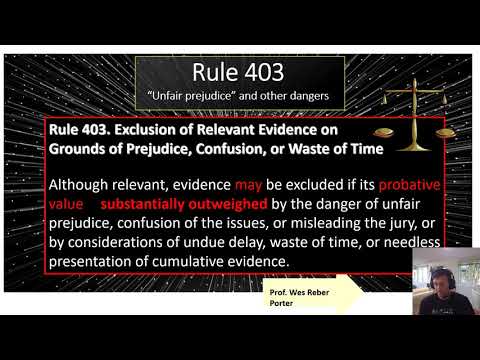
Rule 403 of the Federal Rules of Evidence is all about finding that sweet spot between what evidence is relevant and how much it might unfairly influence a jury. This rule says that even if something seems relevant, it can be excluded if its potential to cause unfair prejudice, confuse the issues, or mislead the jury outweighs its value.
So, what does that really mean? Well, imagine you’re in a courtroom. You hear evidence that’s super interesting but also totally one-sided or could make you think things about a person that just aren’t true. That’s where Rule 403 steps in. It’s like a referee in a game, making sure everything stays fair.
Here are some key ideas under Rule 403:
- Relevance vs. Prejudice: The first thing to understand is that evidence must be relevant to the case at hand. But just because it’s relevant doesn’t mean it has to come in. If it’s likely to lead you down a path that’s more about emotion than fact, it might be tossed out.
- Unfair Prejudice: This term refers to evidence that might sway the jury’s opinion based on feelings rather than solid reasoning. Think about a heated crime scene photo; while relevant, it could make jurors react on emotion instead of logic.
- Confusion of Issues: Sometimes, evidence can confuse jurors about what they should actually be deciding on. If certain details just cloud the main issue without having real significance, they might get cut under Rule 403.
- Misperceptions: Evidence can unintentionally lead jurors to misunderstand the facts or situations surrounding a case. For example, if someone wants to bring up an old arrest for something completely unrelated, it could create misleading assumptions.
Here’s a real-world feel for how this works: let’s say there’s a fraud case going on and one side wants to show some previous allegations against the defendant – allegations that were dismissed years ago and aren’t even related to current claims! The judge would likely say no way under Rule 403 because those past claims could unfairly taint the jury’s view of this person without being truly relevant.
You see, balancing relevance and prejudice is no small task for judges—they’ve got to consider not only how evidence fits into the story but also how it shapes emotions and thoughts among jurors. They play an essential role as gatekeepers here.
In short, Rule 403 helps ensure that trials are fair by controlling what information the jury gets to see and hear. It’s about keeping things on track so decisions are made based on facts rather than feelings or distractions! So next time you think about courtroom drama, remember there’s more than meets the eye when it comes to what’s allowed through those doors!
When it comes to the legal world, there’s this constant balancing act between what you can bring to court and what might unfairly sway a jury. That’s kind of the essence of Federal Rule of Evidence 403. You see, this rule lets judges keep evidence out if its potential for prejudice outweighs its relevance. It’s all about making sure that a trial stays fair, you know?
Imagine being in the courtroom. You’ve got evidence that paints a real picture of what happened, but it also dredges up some personal stuff that could lead jurors to make judgments based on emotions instead of facts. Like, say you’re on trial for something serious, and there’s evidence about your past that doesn’t really relate to the case but could totally make people think less of you as a person. It kind of feels like when your high school classmate throws up old rumors during a reunion; it just drags everyone back into stuff that doesn’t define who you are now.
So you have these two sides: relevance and prejudice. One is saying, “Look at me! I can help understand the story!” The other is like, “But hey! Don’t forget, I could easily make things messier.” The judge has the tough job of deciding which side wins in each situation.
In practice, this isn’t always cut-and-dry. For instance, judges are sometimes hesitant to exclude potentially prejudicial evidence because they don’t want to risk leaving out something really important for the case. But then there are times when they decide that even if it seems relevant, it just opens a can of worms—like derailing an entire trial into gossip territory instead of focusing on what actually matters.
And here’s where it gets personal: imagine being in court as the person being judged—not just for your actions but also for who people think you might be based on irrelevant baggage from your past. That feels so unfair! Balancing relevance with prejudice isn’t just about law; it’s about human lives and reputations hanging in the balance.
So yeah, navigating through Rule 403 is tricky business. It demands not just legal knowledge but a genuine understanding of human nature and fairness—a lot easier said than done!




