
The information provided in this article is intended solely for general informational and educational purposes related to U.S. laws and legal topics. It does not constitute legal advice, legal opinions, or professional legal services, and should not be considered a substitute for consultation with a qualified attorney or other licensed legal professional.
While efforts have been made to ensure the information is accurate and up to date, no guarantees are given—either express or implied—regarding its accuracy, completeness, timeliness, or suitability for any specific legal situation. Laws, regulations, and legal interpretations may change over time. Use of this information is at your own discretion.
It is strongly recommended to consult official sources such as the U.S. Government (USA.gov), United States Courts, or relevant state government and court websites before acting on any information contained on this website or article. Under no circumstances should professional legal advice be ignored or delayed due to content read here.
This content is of a general and informational nature only. It is not intended to replace individualized legal guidance or to establish an attorney-client relationship. The publication of this information does not imply any legal responsibility, guarantee, or obligation on the part of the author or this site.
So, let’s talk about summary judgment. You know, that moment in a court case when things get decided before the trial even kicks off? Crazy, right?
It sounds all legal and stuff, but it’s actually pretty simple once you break it down. Picture this: you’re in a courtroom, and someone says, “Hey, we don’t even need to go to trial because the facts are clear.” That’s summary judgment for you.
You might be wondering why anyone would want to skip the whole trial thing. Well, sometimes it saves everyone a ton of time and money. But it also raises some eyebrows. Is it fair?
Stick around while we untangle this concept together. It’s kinda cool when you get into the nitty-gritty of how it works in the American legal scene!
Understanding Summary Judgment: A Comprehensive Guide to Explanation and Application
Understanding summary judgment is pretty important if you’re diving into the U.S. legal system. It’s like a shortcut in a courtroom that helps move cases along. Buckle up, because I’m about to break it down in simple terms.
What is Summary Judgment?
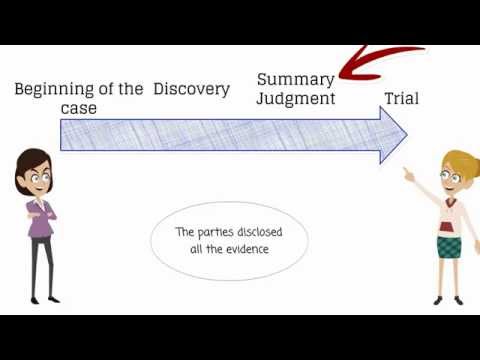
Basically, summary judgment is when a judge decides a case without letting it go to trial. You can think of it like this: if both sides of a case have laid out their arguments and evidence, and there aren’t any real disputes about key facts, one side can ask the judge to toss the case out—saving everyone time and money.
When Can You Use It?
You might be wondering when this magic trick comes into play. Well, summary judgment comes into focus during civil cases, especially those where someone is claiming damages or seeking specific outcomes. It’s primarily used when there are no factual questions left for a jury to decide; basically, if there’s nothing left to argue about!
The Legal Standard
To make your case for summary judgment (it’s called a “motion” by the way), you need to show two main things: first, that there’s no genuine dispute over material facts; second, that you’re entitled to judgment as a matter of law. Think of it like showing up with all your homework done while the other kid is still trying to figure out their math problems.
A Quick Example
Imagine you slip and fall in a grocery store because there was water on the floor and no warning signs. If you sue the store, they might file for summary judgment if they can prove that they had no reasonable way of knowing the floor was wet before you fell. They could argue that even if there was water—and let’s say there was—it wasn’t their fault since they just mopped moments before you walked in!
How Does It Work?
Here’s how things usually unfold: after someone files for summary judgment, there’s typically some back-and-forth with briefs being exchanged—these are essentially written arguments from both sides detailing why they believe they’re right. Sometimes courts will hold oral arguments as well so both sides can present their points verbally.
The Judge’s Decision
Once everything’s presented, judges review all evidence submitted. If they see that one side clearly deserves the win based solely on what they’ve shown without needing more evidence or witnesses—boom! They grant summary judgment in favor of one party.
The Upside
The beauty of summary judgments? They help reduce unnecessary trials when it’s clear who should win based on existing facts! Not only does this save court resources but it also saves money for parties involved—a win-win situation, right?
The Downside
However, not everything’s sunshine and rainbows with this process. Sometimes it’s misused as a tactic by one party trying to avoid trial altogether or dismiss valid claims before they get heard fully. That’s where courts keep an eye on things really closely!
In short, understanding summary judgment isn’t just lawyer-speak; it’s part of navigating through legal waters smoothly when disputes arise. This process makes sure we keep things moving without bogging down our courts unnecessarily—because nobody has time for endless trials over stuff that could be resolved quickly!
Understanding Summary Judgment in the United States: Key Concepts and Legal Implications
Summary judgment is this legal tool used in U.S. courts to resolve disputes without going through a full trial. Imagine you’re in a situation where the facts are pretty clear, and there’s no need to waste time with a lengthy process. That’s where summary judgment comes in.
So, what exactly is it? It’s when a party requests the court to make a decision based on the evidence presented, arguing that there are no genuine issues of material fact. In other words, one side says, “Hey, the facts are what they are; we don’t need to argue over them in front of a jury.” This can save tons of time and money.
Now let’s break down some key concepts related to summary judgment:
- Material Fact: This refers to any fact that could influence the outcome of the case. If a fact doesn’t matter at all to the final decision, it’s not material.
- Genuine Issue: If there’s still some disagreement about crucial facts between both parties, it means there’s a genuine issue that needs resolving—typically by a jury.
- Motion for Summary Judgment: This is basically how one party tells the court they believe there’s no need for trial because the evidence is clear-cut.
Here’s an example: Let’s say you’re involved in a slip-and-fall lawsuit after someone gets injured on your property. You might file for summary judgment by showing photos and witness statements that prove you had taken reasonable care of your property—like shoveling snow or cleaning spills. If everything looks solid and there’s no dispute over those facts, you could win without ever stepping foot into trial.
The court looks at all evidence, like depositions and documents submitted by both sides, but they focus mainly on whether any issues remain that demand a jury’s attention. Judges generally view these motions in the light most favorable to the non-moving party—you know, keeping things fair.
But here’s something interesting: even if one side wins on summary judgment, it doesn’t always mean it’s over. There can be appeals, which could drag things out further. Another thing? Judges have quite a bit of discretion when deciding whether or not to grant these motions—so there’s still room for some unpredictability.
Think about it this way: Summary judgment can feel like hitting fast-forward on your case! It cuts through all the extra noise and focuses right on whether legal claims hold up under established law based on undisputed facts.
Understanding the Downsides of Filing for Summary Judgment in Legal Proceedings
Filing for summary judgment can seem like a quick way to wrap up a case. You’re basically saying, “Hey, judge, there’s no need for a trial here; the facts are so clear that we can go straight to a decision.” Sounds efficient, right? But hold on! There are some serious downsides to consider.
First off, let’s talk about the cost. Even though you might think you’re saving time by skipping the trial, pursuing summary judgment can actually get pricey. You’ll still need to gather evidence, prepare extensive motions, and potentially even hire experts. All that adds up!
Then there’s the risk of alienating the judge. If your motion doesn’t convince them that you’re right and they see it as an attempt to sidestep a full hearing, it could backfire. A judge might get annoyed if they feel like you’re trying to cut corners.
Also consider limited discovery. When you file for summary judgment early on in a case, especially before all evidence is out in the open, you’re putting yourself at risk. You might miss out on crucial information that could be revealed later during discovery. What if there’s a key piece of evidence that turns everything around?
Now let’s not forget about the potential for appeal. If you lose your motion for summary judgment—or even if you win but it’s not favorable—it can open the door for appeals. And appeals mean more legal battles and more money down the drain.
It’s also worth noting how filing for summary judgment can affect negotiations. If you’re too focused on winning without going through all the processes, it might ruin any chance of settling amicably with the other party. In many cases, sticking to negotiation rather than rushing into court could be way more beneficial in the long run.
So yeah, while filing for summary judgment has its perks—like speed and avoiding lengthy trials—the downsides are pretty significant too. It’s one of those situations where taking a step back before jumping in could really pay off!
So, summary judgment, huh? It might sound fancy, but it’s really just a way to speed things up in court when the facts of a case aren’t really in dispute. Picture this: you’re in a courtroom, and both sides have thrown their arguments on the table. If one side can show there’s no genuine issue of material fact—basically that everyone agrees on what happened—the judge can decide the case without dragging it out through a full trial. Wild, right?
I remember hearing about a friend who got wrapped up in a lawsuit over some property dispute. It dragged on for months, causing all this stress and expense. Then one day, her lawyer explained how they had filed for summary judgment because all the evidence was clear-cut. The other side didn’t even bother fighting back because they knew they were in the wrong. Just like that, her case was resolved without the headache of trial.
The thing is, not every case can get that shortcut. The judge looks closely at what evidence and facts are presented before deciding if it’s appropriate for summary judgment. If there’s even a sliver of doubt or differing testimony about what went down, then it’s off to trial we go! And let me tell you—trials can be intense!
What makes this whole process interesting is how it’s designed to save time and resources for everyone involved—courts, lawyers, and especially you if you’re waiting for closure on something stressful like that lawsuit I mentioned earlier. But it also means understanding that just because your side seems solid doesn’t guarantee you’ll get a quick win; there are rules and nuances that come into play.
So yeah, summary judgment is kind of like cutting through all the fluff when both parties know what’s up and just need the court to put an official stamp on things. It’s built into our legal system to keep things moving along without unnecessary delays!




