
The information provided in this article is intended solely for general informational and educational purposes related to U.S. laws and legal topics. It does not constitute legal advice, legal opinions, or professional legal services, and should not be considered a substitute for consultation with a qualified attorney or other licensed legal professional.
While efforts have been made to ensure the information is accurate and up to date, no guarantees are given—either express or implied—regarding its accuracy, completeness, timeliness, or suitability for any specific legal situation. Laws, regulations, and legal interpretations may change over time. Use of this information is at your own discretion.
It is strongly recommended to consult official sources such as the U.S. Government (USA.gov), United States Courts, or relevant state government and court websites before acting on any information contained on this website or article. Under no circumstances should professional legal advice be ignored or delayed due to content read here.
This content is of a general and informational nature only. It is not intended to replace individualized legal guidance or to establish an attorney-client relationship. The publication of this information does not imply any legal responsibility, guarantee, or obligation on the part of the author or this site.
So, let’s talk about civil process and juries. Sounds a bit legal, right? But stick with me!
You know that moment when your friend is in a heated debate over who borrowed the last pizza slice? Imagine that, but with way higher stakes. That’s kinda what civil cases are about.
It’s where people go when they need to hash things out without throwing punches—like money disputes or contract issues. And guess what? Juries play a huge role in this!
They’re not just for criminal cases; they help decide who’s right and who’s wrong in all sorts of legal drama. Curious about how it all works? Let’s break it down together!
Understanding the Jury’s Role in Civil Cases: A Comprehensive Guide
So, let’s break down the jury’s role in civil cases. You know, when people think about juries, they often picture dramatic criminal trials—like in the movies. But juries play a huge role in civil cases too. Here’s what you need to know.
What is a Civil Case?
A civil case is basically a legal dispute between two or more parties. It could be about anything from personal injury and contract issues to property disputes. Unlike criminal cases, where someone’s facing jail time, civil cases usually deal with monetary damages or specific actions required by law.
The Jury’s Role
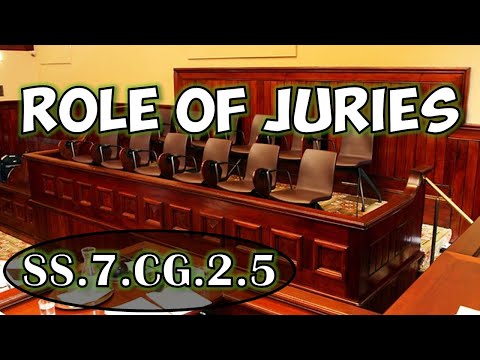
In these cases, juries help determine who’s right and what the outcome should be. They decide facts based on the evidence presented during the trial. The jury’s job is to assess the evidence and reach a verdict—a finding that can lead to one party being compensated for their losses.
How Many Jurors?
Typically, a civil jury has six to twelve members, depending on state laws and if it’s a federal case. It’s not as big as those criminal juries you see on TV! And unlike criminal cases that require unanimous verdicts in most situations, many civil cases allow for a majority decision.
The Process
Here’s how it usually goes down: after both sides present their arguments and evidence, the judge gives instructions on the law applicable to the case. This may seem boring but hang tight; it’s crucial! Then comes deliberation where jurors discuss amongst themselves before deciding their verdict.
Burden of Proof
In civil cases, you’ve got something called “preponderance of the evidence.” This means that one side just has to convince the jury that their version of events is more likely true than not—sometimes described as over 50%. So it’s not as tough as proving guilt beyond reasonable doubt like in criminal law.
Anecdote Time!
Imagine a small bakery getting sued by a customer who slipped and fell inside because of spilled flour. The jury would hear both sides: maybe arguments about whether proper safety measures were taken or if the customer was being careless. They’d weigh all this and decide if the bakery should pay damages or if it was an accident no one could have foreseen.
The Importance of Juries
You might be thinking—why even have juries? Well, they offer a way for ordinary people to participate in justice! They help ensure that community standards influence legal outcomes rather than leaving everything up to judges alone.
In essence, understanding how juries function in civil cases gives you insight into an important part of our legal system. They’re not just key players—they’re essential for ensuring fairness and transparency in resolving disputes from everyday life! And hey, next time you hear about a trial, remember there might be some folks just like you trying to figure out what really happened!
The Role of the Jury in the United States: Understanding Its Function and Importance in the Legal System
The jury system in the United States is a cornerstone of our legal framework. It’s one of those things that makes your average courtroom drama so captivating. But at its core, it’s about ordinary people stepping up to decide the fate of others based on evidence and truth. The thing is, juries are more than just a dramatic plot point; they play a critical role in both civil and criminal cases.
So, what does a jury actually do? Well, first off, juries are typically made up of twelve people. They listen to the evidence presented during the trial and then sit down to discuss it. Their job? To determine whether the claims made by one party (the plaintiff) against another (the defendant) are valid or not.
In civil cases, like when someone sues for damages after a car accident or breach of contract, juries help ensure that justice isn’t just some obscure concept but something tangible. They weigh the evidence—like witness testimony or documents—and come to a verdict based on what they believe happened. This can be life-changing for folks involved. Imagine being in a lawsuit over your small business getting shut down due to a false allegation; knowing that you have a group of unbiased peers deciding your fate is pretty important, right?
Now let’s talk about the importance of juries. One key aspect is that they bring community values into the courtroom. You see, judges interpret laws and legal precedents which might be far removed from real life—especially for everyday folks like you and me! Jurors can inject local morals and social norms into their decisions, making them more relevant.
That said, being selected for jury duty can feel like being called for an inconvenient errand. But think about this: when you step into that role as a juror, you’re part of something bigger than yourself—a way to uphold justice in your community. Seriously! It’s one time where your opinion actually matters in deciding real-world outcomes.
The jury also acts as a check on government power. This means that if someone believes they’ve been wronged by another person or entity (even big corporations), they have peers who can stand up against powerful interests and say “Hey! That’s not right!”
But don’t get me wrong—juries aren’t perfect. Sometimes they’ll reach decisions based on emotions rather than facts (which can lead to some wild outcomes). Juries are human; they come with biases and perceptions just like anyone else! Yet despite these imperfections, their presence alone helps ensure fairness in trials.
And here’s something interesting: while most criminal trials use juries too, civil trials can often go without them if both parties agree on it. In fact, many high-stakes business disputes settle without ever seeing the inside of a courtroom because parties prefer arbitration instead.
Wrapping it up: why should you care? The jury system represents your voice in legal matters—it empowers ordinary people like you to influence justice directly! And every time you hear “jury duty,” consider it an opportunity rather than an obligation.
So next time you’re sitting through those boring law dramas or reading news about court cases, remember: it’s not just entertainment; it’s part of how we keep our society running smoothly!
Understanding Judicial Authority: Can a Judge Overrule a Jury Verdict in Civil Cases?
In the U.S. legal system, the relationship between judges and juries can be a bit tricky. You might be wondering, “Can a judge actually overrule a jury verdict in civil cases?” Well, let’s break it down!
First off, it’s important to know that **juries play a crucial role** in civil cases. They’re there to listen to the evidence, weigh it, and come up with a verdict based on that. However, judges hold significant power too. So here’s where things start to get interesting.
Basically, after a jury reaches its decision, the judge has the option to step in if they feel that something went wrong. The judge can issue what’s called a **judgment notwithstanding the verdict (JNOV)** if they believe that no reasonable jury could have reached that conclusion based on the evidence presented. This is like saying, “Hey jury, you missed the mark here.”
You see? It’s not just about personal opinions or feelings; it’s about what’s fair and just according to the law.
Now let’s touch on some key points regarding this whole process:
- Standard for Overruling: A judge can only overrule a jury if there’s insufficient evidence to support their verdict or if it’s against the weight of evidence.
- Preserving Rights: If you’re unhappy with a jury outcome—as either party—you typically have options like appealing or asking for a retrial instead of hoping the judge will overrule.
- Judicial Discretion: Judges often exercise their discretion when deciding whether to intervene. It can really depend on the case specifics and sometimes even their own perspective.
An emotional example comes from *a civil case involving two small businesses*. One business claimed damages after another allegedly stole trade secrets and caused significant financial harm. The jury returned in favor of one side after deliberating for days! But then later, when all was said and done, the judge reviewed everything closely and thought there wasn’t enough evidence to support such large damages awarded by the jury. The judge ultimately ruled against them using JNOV.
This shows how critical it is for judges to balance justice with law—sometimes their duty means overriding what a jury decides.
In short, while juries are vital players in civil cases, judges do wield some authority when they think something doesn’t quite add up. It’s all about fairness—and making sure justice is truly served!
You know, when you think about the civil process in U.S. law, it can seem kinda dry and legalistic at first glance. But it’s really about people and their disputes. Imagine two neighbors fighting over a property line, each thinking they’re right. This is where the civil justice system kicks in.
Civil cases aren’t about criminal charges—there’s no jail time at stake. Instead, it’s mostly about resolving conflicts and compensating someone for harm done, like a car accident where one driver causes damage to another’s vehicle. These cases often involve money or contracts. It’s all about sorting things out in a way that feels fair to everyone involved.
Now, the jury’s role in this whole process? That’s where things get interesting! Picture yourself sitting in a jury box, listening to arguments from both sides, weighing evidence, and ultimately deciding who’s right or wrong. Juries provide that community touch—regular folks making decisions that can significantly impact lives.
Let’s say you’re part of a jury deciding on a case where someone is suing for damages after slipping on a neighbor’s icy steps. You might feel empathy for the injured person while also considering how the neighbor truly maintained those steps throughout winter. It’s not just numbers; it’s real life! And guess what? Your feelings and perceptions help shape the verdict.
However, not everyone gets to experience this firsthand; some folks don’t even want to be called for jury duty. But it’s pretty crucial! Serving as a juror means you’re helping uphold justice in your community. You’re basically stepping into someone else’s shoes and trying to understand their situation.
But there’s also pressure involved—juries must make decisions based only on evidence presented during the trial and follow the law as instructed by the judge. It can be challenging to leave personal biases at the door when dealing with emotionally charged cases.
At the end of it all, the civil process stands as an essential feature of democracy—it allows us regular folks to have a say in how justice is served while ensuring there are checks and balances along the way. Sure, it might be daunting if you’re summoned for jury duty someday, but remember: you’re part of something bigger than yourself!




