
The information provided in this article is intended solely for general informational and educational purposes related to U.S. laws and legal topics. It does not constitute legal advice, legal opinions, or professional legal services, and should not be considered a substitute for consultation with a qualified attorney or other licensed legal professional.
While efforts have been made to ensure the information is accurate and up to date, no guarantees are given—either express or implied—regarding its accuracy, completeness, timeliness, or suitability for any specific legal situation. Laws, regulations, and legal interpretations may change over time. Use of this information is at your own discretion.
It is strongly recommended to consult official sources such as the U.S. Government (USA.gov), United States Courts, or relevant state government and court websites before acting on any information contained on this website or article. Under no circumstances should professional legal advice be ignored or delayed due to content read here.
This content is of a general and informational nature only. It is not intended to replace individualized legal guidance or to establish an attorney-client relationship. The publication of this information does not imply any legal responsibility, guarantee, or obligation on the part of the author or this site.
So, you know how sometimes things in court can get a bit… complicated? Like, there’s a lot going on, and it’s hard to keep track. Well, one of those things is partial summary judgment.
It sounds like a mouthful, right? But hang on, it’s actually pretty interesting. This legal tool can help speed up cases and clear out some clutter before they hit trial. It’s like tidying up your room so you can find what you really need.
Imagine being stuck in a long, drawn-out battle over something that could’ve been resolved quicker. Frustrating, huh? That’s where partial summary judgment comes in to save the day—or at least make things smoother.
Let’s break it down together!
Understanding Partial Summary Judgment: Definition, Implications, and Legal Context
So, let’s talk about partial summary judgment. This term might sound a bit intimidating, but it’s basically a court’s way of deciding some parts of a case without going through the whole trial. You know how sometimes you just want to get to the good parts? Well, this is kinda like that.
Essentially, partial summary judgment is when a judge rules that one side in a lawsuit has won on certain issues or claims. The judge looks at the evidence presented and decides there’s enough info to make a call—no need for those facts to go to trial. It saves time and resources for everyone involved.
Now, what does it mean when you say “partial”? That just means it’s not about the whole case. For example, let’s say you’re suing someone because they rear-ended your car and caused injuries. If the judge thinks there’s clear proof they were at fault but isn’t sure about how much damages you’re entitled to, they can grant partial summary judgment on liability but leave damages for later. Pretty neat, huh?
- Legal Context: Partial summary judgments are often filed under Rule 56 of the Federal Rules of Civil Procedure. Most state courts have similar rules.
- Implications: These rulings can streamline litigation because they settle key issues early on.
- Burdens of Proof: The party requesting this ruling has to show there’s no genuine dispute over material facts; basically, they need to prove their case is strong enough so that there’s no reason for a jury to weigh in.
This type of judgment can work wonders in simplifying cases; it helps narrow down what really needs to be discussed at trial. Think about courtroom drama: if half the arguments are already settled beforehand, there’s less fluff for the jury! They can focus on what really matters.
You might wonder how common these judgments are. Well, they aren’t super rare, especially in complex civil cases where things could drag on forever if every little detail had to be hashed out in front of a jury. They keep things moving and provide clarity when one party clearly has an edge.
A quick thing to keep in mind: if you get partial summary judgment against you—yikes!—it doesn’t mean you’ve lost entirely; it just means that part is decided. So there’s still room for other issues in play!
Overall, understanding partial summary judgment helps demystify part of our legal system—it showcases how judges can streamline cases while making sure justice isn’t delayed. That’s something we all want when we’re tangled up with legal stuff!
Understanding Summary Judgment: A Comprehensive Guide to Its Explanation and Application
Summary judgment is a pretty big deal in the world of law. Basically, it’s a way to resolve a lawsuit without going through the whole trial process. Imagine you’re fighting in court, and one side believes there’s no real issue worth debating. They think the facts are clear enough that there’s no need for a jury. That’s where summary judgment comes into play.
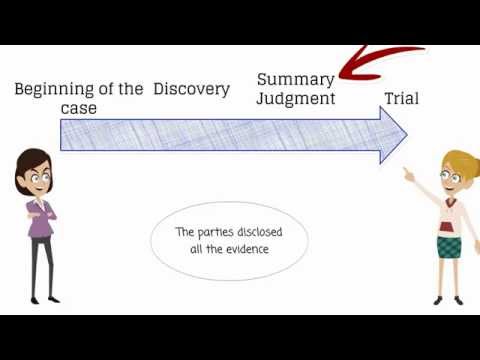
So, how does this work? Well, let’s break it down. In a typical case, both sides present evidence and arguments. They go back and forth, right? But if one party files for summary judgment, they’re saying, “Hey! We don’t need to go any further; we’ve got everything we need.” This request gets sent to the judge who then decides if there are any *genuine issues of material fact* that require a trial.
A partial summary judgment takes things a step further. It’s when the judge decides on certain parts of the case while leaving others unresolved. Let’s say you’ve got a multi-issue lawsuit – like one party claiming breach of contract and also negligence. A judge might agree on one claim but not the other. So they give a partial summary judgment on something like breach of contract, allowing that part to move forward while holding off on the negligence part.
You might be thinking about how this plays out in real life. Here’s an illustration: Imagine two neighbors arguing over property lines and damages from fallen branches during storms. One neighbor thinks they have solid proof their neighbor destroyed their fence (that would be ground for damages). If they file for summary judgment stating “there’s no way around it; I own that land,” the judge could look at all documents and decide pretty quickly if that claim has merit or if things need to be sorted out in court.
Here are some key points about summary judgment:
- No Trial Needed: It saves everyone time and money by skipping unnecessary trials.
- Legal Standard: The burden is on the party requesting it to show there aren’t relevant facts at stake.
- Evidentiary Materials: Parties usually submit documents, affidavits, or depositions to support their claims.
- Judicial Discretion: Judges have significant leeway in deciding these motions – it’s not just black and white.
- Appealable Decisions: You can appeal if you think an error was made in granting or denying summary judgment.
One thing to remember is that while summary judgments, including partial ones, can speed up legal processes significantly, they’re still carefully examined by judges. They want to ensure that nobody’s rights are being snatched away without proper consideration.
Understanding the Appeal Process for Partial Summary Judgments: Key Insights and Considerations
The appeal process for partial summary judgments can be a bit tricky, but understanding it is super important if you ever find yourself in a legal tussle. So, let’s break this down nice and easy.
First off, what’s a partial summary judgment? It’s basically when a court decides that there are some parts of a case that don’t need to go to trial because there’s no serious dispute about those facts. So, the judge can say, “Hey, we already know these things,” and rule on them early. But what if you think the judge got it wrong? This is where appeals come into play.
Now, jumping into an appeal for a partial summary judgment has its own rules. You usually have to follow a specific path. Here’s how it works:
1. Timing is everything. You’ve got to file your appeal within a certain time frame after the ruling—often just 30 days from when the decision was made. If you miss that window, it could be game over for your appeal.
2. Not all appeals are created equal. Unlike full judgments where you might get more breathing room to argue your case, partial summary judgments can be more limited in scope during an appeal. You’re typically just contesting those specific parts the judge decided on early.
3. The standard of review matters. When the appellate court looks at these cases, they often grant some leeway to the lower court’s decisions because judges have discretion based on their observations and interpretations during proceedings. They don’t like to disturb those unless there’s clear evidence of error.
Now let’s get into some considerations:
4. Legal basis for your appeal. You need solid legal arguments backing up why that partial judgment should be overturned or re-evaluated. It isn’t enough to just say you disagree—you have to show how the law was misapplied or misunderstood by the judge.
5. The weight of evidence. If compelling evidence was ignored or misinterpreted by the trial court when making its decision, bring that up! This is crucial for convincing appellate judges that they should take another look at what happened below.
On top of all this, prepare for another layer of complexity: judicial economy. Courts often want to avoid cluttering their dockets with appeals for every little thing decided in lower courts—that’s why they’re somewhat reluctant about diving deep into partial judgments unless they’re really necessary.
And let me tell you about something even more interesting—if you’re appealing a partial summary judgment while still at trial for other claims, it can get confusing real quick! Courts generally prefer cases getting resolved in one go; multiple appeals can mess with efficiency.
So yeah, understanding the nuances of this whole process is key if you ever find yourself needing to navigate through it! The appeal process for partial summary judgments isn’t just about fighting back; it’s about strategically positioning yourself based on law and evidence presented earlier in your case. It takes careful planning and execution—and maybe even some patience—to see where it leads you next!
Alright, so let’s chat about partial summary judgment. It might sound super legalistic, but it’s actually pretty interesting once you get into it, you know?
So, imagine you’re in a courtroom. There are all these facts flying around, and both sides are presenting their arguments. Now, sometimes the judge can step in and say, “Hold on a second! We don’t need to go through all this if there are parts of the case we already agree on.” That’s where partial summary judgment comes in.
Basically, it’s this tool that helps to simplify cases by resolving certain issues before they ever hit the trial stage. It’s like a referee calling a penalty during a game—you don’t have to play through the whole thing if rules were broken earlier on. The judge looks at the evidence presented and decides if there’s enough clear evidence about specific points that make going to trial unnecessary for those aspects.
I remember hearing about a case where two companies were in this nasty lawsuit over a patent. They argued back and forth for what felt like ages! Finally, the judge looked at some key documents that showed one company pretty clearly didn’t have rights to certain claims. With partial summary judgment, he decided they wouldn’t even waste time arguing about that part of the patent anymore. It totally streamlined things!
Now, what’s cool here is that while this can keep things moving along quickly, it also means you really need solid evidence upfront—you can’t just come in with half-baked arguments expecting the judge to throw out parts willy-nilly. Both sides have to lay out their cards fairly early in the game.
But here’s the catch: even though some issues might get resolved right away, there could still be other contested ones left hanging around which means heading toward trial for those bits. So yeah, it’s kind of like you get a little win but not necessarily total victory yet.
In essence, understanding partial summary judgment is crucial since it shapes how cases unfold in court. It keeps things efficient but also adds pressure on both sides to be prepared and organized with their facts from day one. And honestly? That makes for an intriguing dance between strategy and law!




