
The information provided in this article is intended solely for general informational and educational purposes related to U.S. laws and legal topics. It does not constitute legal advice, legal opinions, or professional legal services, and should not be considered a substitute for consultation with a qualified attorney or other licensed legal professional.
While efforts have been made to ensure the information is accurate and up to date, no guarantees are given—either express or implied—regarding its accuracy, completeness, timeliness, or suitability for any specific legal situation. Laws, regulations, and legal interpretations may change over time. Use of this information is at your own discretion.
It is strongly recommended to consult official sources such as the U.S. Government (USA.gov), United States Courts, or relevant state government and court websites before acting on any information contained on this website or article. Under no circumstances should professional legal advice be ignored or delayed due to content read here.
This content is of a general and informational nature only. It is not intended to replace individualized legal guidance or to establish an attorney-client relationship. The publication of this information does not imply any legal responsibility, guarantee, or obligation on the part of the author or this site.
You know when you’re watching a movie, and it suddenly cuts to a courtroom scene? Everyone’s sitting there, waiting for the judge to drop some big news. Well, in real life, stuff like that doesn’t always happen. Sometimes cases get wrapped up before they even hit the trial stage.
That’s where Rule 56 comes into play. It’s a legal tool that can hasten things along—like fast forwarding through those long, drawn-out scenes you don’t want to sit through.
Basically, if one side has a seriously strong case or there’s no real argument left, they can ask the court for a summary judgment. It’s like saying, “Hey judge, let’s skip the drama and just get to the point.”
So what does all this mean? And why should you care? Let’s break it down together!
Understanding Summary Judgment Under Rule 56: Key Insights and Implications
Summary Judgment is a key legal concept you might stumble upon if you’re ever involved in a civil lawsuit. It’s all about deciding a case or certain issues within a case without going to trial. Basically, it’s like saying, “Hey, we don’t need to drag this out any longer—there’s no real dispute here.” This falls under Rule 56 of the Federal Rules of Civil Procedure.
So, what exactly does Rule 56 say? Well, it allows either party in a lawsuit to file a motion for summary judgment. They’re saying that based on the evidence available, there’s no need for a jury or judge to deliberate further because there’s no material fact in dispute. You follow me?
Now, when someone files for summary judgment, here’s what they must show:
- No genuine dispute of material fact: This means that the facts of the case are undisputed—or if there are disputes, they don’t affect the outcome.
- The movant is entitled to judgment as a matter of law: The person asking for summary judgment needs to prove that under current law, they should win based on the undisputed facts.
Picture this: You’re at a coffee shop and someone claims they ordered an espresso but got stuck with decaf. If both sides agree on all details—that they were at the same coffee shop and made their orders—then there’s no need for more debate about which drink was served. The evidence is clear; one person wins based purely on that fact.
When it comes time for judges to decide these motions, they have to view everything in the light most favorable to the non-moving party—basically giving them the benefit of the doubt. That way, if any reasonable jury could find in favor of that party based on how things stand? Then typically, summary judgment wouldn’t be appropriate.
But wait—there’s more! A few important implications come with this ruling:
- Saves time and resources: Courts can eliminate cases that don’t need full trials when there’s clear-cut evidence.
- Focuses on relevant issues: Judges can hone in on key factors rather than getting bogged down with irrelevant stuff.
- Encourages settlements: When parties know there’s a high chance of summary judgment being granted against them, they may be more inclined to settle rather than risk it in court.
Still unsure? Here’s an example: Say you’re suing someone over unpaid rent. If your tenant admits they owe money but just argues over how much (say $100 vs. $200), you could file for summary judgment because there’s still an acknowledgment of debt involved—the factual dispute isn’t enough by itself.
In essence, Rule 56 serves as a powerful tool in streamlining cases where factual disagreements won’t make any difference under applicable law. Legal movements often flow faster thanks to this mechanism! Just remember—it doesn’t replace good ol’ trial proceedings when they’re needed; rather it complements them by keeping frivolous disputes from wasting everyone’s time.
In sum, understanding summary judgment under Rule 56 is crucial if you’re navigating through civil litigation. It helps clarify who really has the legal ground in situations where facts are not actually contested.
Understanding the Disadvantages of Filing for Summary Judgment in Legal Proceedings
Filing for summary judgment can often seem like a tempting shortcut in legal proceedings. It’s all about getting that quick win, you know? But before diving in, it’s smart to understand the disadvantages too. Here’s the scoop on what can go wrong when you decide to go this route under Rule 56.
What is Summary Judgment?
To kick things off, summary judgment is when a party asks the court to decide a case or specific parts of it without going to trial. They argue that there are no genuine disputes over material facts, meaning everything is so clear-cut that a trial isn’t necessary. Sounds great, right? But hold up!
First Disadvantage: Limited Scope
When you file for summary judgment, you’re really narrowing your focus. You’re saying certain facts are not open for debate. This can backfire because if the judge doesn’t fully agree with your perspective or finds some merit in the opposing side’s argument, your case might take a hit. Instead of proving your point, you could end up reinforcing theirs.
Second Disadvantage: Resources and Time
Going for summary judgment can also take up a lot of resources and time—kind of ironic since you think it might save you both! Preparing the motions requires thorough research and solid evidence to convince the judge. If it doesn’t pan out, you’ve spent all that time and energy for nothing.
Third Disadvantage: Risk of Overconfidence
Sometimes lawyers get overconfident with these motions. They might assume victory is in the bag after filing but misread the strength of their case or the opposition’s arguments. It’s easy to think “this will be straightforward.” You know what they say about assumptions…
Fourth Disadvantage: Potential Backlash
And then there’s this whole backlash thing—if you file for summary judgment and lose, it could make your position look weaker moving forward in court. Opponents may view it as an act of desperation rather than confidence in your case.
Fifth Disadvantage: Limited Appeal Options
If things don’t go your way, appealing a summary judgment can be tougher than other aspects of trial rulings. It’s like shooting yourself in the foot before even crossing into the courtroom.
Now imagine this: You’re invested heavily into this motion thinking it’ll lead straight to victory, but instead you’re faced with setbacks one after another because not every fact was as clear-cut as you believed. It’s disheartening!
Ultimately, while using Rule 56 to file for summary judgment might seem like an appealing shortcut through legal proceedings, understanding these disadvantages is crucial before taking that leap. Every step counts—so take them wisely!
Understanding Summary Judgment: Key Requirements and Legal Criteria
Sure, let’s break down summary judgment in a way that makes sense. Summary judgment is a legal process. It lets courts decide cases without going to trial when there isn’t any real dispute about the key facts. This saves time and money for everyone involved. So, what are the key requirements and legal criteria? Let’s dive into it.
What is Summary Judgment?
Basically, it’s a way to resolve a case quickly. If one party believes there’s no genuine issue of material fact, they can ask the court to make a decision based on the evidence presented in documents rather than holding a full-blown trial.
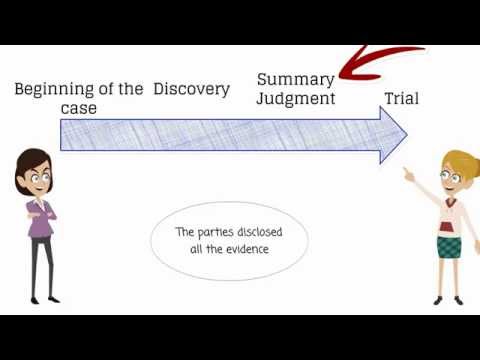
Rule 56, which governs summary judgment, tells us how this works. You’ll find it in the Federal Rules of Civil Procedure. The rule states that either party can file for summary judgment at any point up until 30 days after the close of discovery—that’s when both sides gather their evidence.
Key Requirements
There are a few key things you need to know about summary judgment:
- No Genuine Issue of Material Fact: This means there must be no real disagreement over the facts that matter to the case. If there’s a dispute over something significant, then it’s not ripe for summary judgment.
- Entitlement to Judgment as a Matter of Law: Even if all facts are agreed upon, one side must show they’re entitled to win under existing law.
- Sufficient Evidence: The party requesting summary judgment has to provide enough evidence—like affidavits or documents—to support their claim or defense.
Now let’s talk about how this plays out in practice! Imagine you’re involved in a car accident case. If you think there’s clear evidence that the other driver was at fault—like traffic camera footage—you could file for summary judgment instead of just waiting for trial day.
The Process
So here’s how it generally goes down:
1. **Filing:** The moving party (the one asking for summary judgment) files their motion with supporting documents.
2. **Opposition:** The other party gets a chance to respond, presenting their own evidence and arguments.
3. **Court Decision:** The judge reviews everything—the motion and opposition—and decides if there really are any material facts in question.
If there aren’t any, they grant the summary judgment!
Why Use Summary Judgment?
It can be super helpful in clearing cases out of court before they even get started on trial prep! This helps each side avoid unnecessary expenses and emotional stress from dragging things out longer than needed.
However, not every case is suitable for this approach. Sometimes you just gotta go through the entire process! It often depends on whether there are disputes over significant facts or complicated legal questions involved.
So remember: while summary judgments can be powerful tools in your legal toolbox, they aren’t always applicable, and trying to file without valid grounds could lead to some disappointment!
That wraps up our chat on understanding summary judgment! It’s all about making sure you’re efficient with your time and resources when there’s just no need for lengthy trials where everyone’s already mostly on the same page!
So, let’s talk about Rule 56 and summary judgment in the U.S. legal system. You know, it’s one of those terms that might sound super complicated at first, but once you break it down, it starts to make sense.
Imagine being in a courtroom. The tension is high, and both sides are laying out their cases. You’ve got all this evidence and testimony, right? But sometimes, things can drag on for way too long when it’s clear that one party doesn’t even have a leg to stand on. That’s where Rule 56 comes into play.
Basically, summary judgment is like saying, “Hey, there’s no need for a trial here because the facts are so clear-cut.” If one side can show that there’s no genuine dispute about any material fact—like something crucial to the case—they can ask the court to rule in their favor without going through the whole rigmarole of a trial. Pretty neat when you think about it!
I remember hearing about this one case where a small business owner was being sued over a contract dispute. It seemed endless—the back-and-forth went on for months! Finally, they got smart and filed for summary judgment after showing that the other party had no evidence to support their claims. The judge looked at everything and said, “Yep, not enough here.” Just like that—case dismissed!
But it’s not as simple as just asking for summary judgment; you gotta back it up with solid evidence. The courts want to see concrete proof that there isn’t anything left to argue about.
Now, there are some important rules around this process—like what evidence can actually be used and how parties must present their arguments. And if someone gets caught trying to hide or twist facts? That could open them up to some serious issues down the line.
So yeah, Rule 56 serves as a really important tool in our legal system. It helps keep things efficient while still protecting everyone’s rights by ensuring that only legitimate disputes get dragged through trial after trial. It’s like having a referee who steps in before things get out of hand!




